This article is about my first visit to Mawphlang Sacred Forest in Meghalaya and how rain changed my trekking plans for the David Scott Trail during my Meghalaya Trip.
On September 3rd, 2022, I was on a 12-hour overnight train journey to Guwahati to have my HP Laptop repaired. I realized it would at least take a day or two to repair it.
I was lying down to sleep on the upper berth of the train and thinking of what to do for those two days. I spontaneously decided to visit Meghalaya for the David Scott Trail Trek.
Reaching Guwahati the next morning, I handed over my laptop to the technician.
I tried to call a few friends from Meghalaya to learn more about how the trek could be done.
I had no contact of homestays or accommodations, nor did I go to Mawphlang before. I had crossed the road only once while travelling to Mawlyngbna.
I rented a motorcycle from TRIVANE near Zoo Tiniali in Guwahati and started my motorcycle ride to Meghalaya around 3:30 pm.

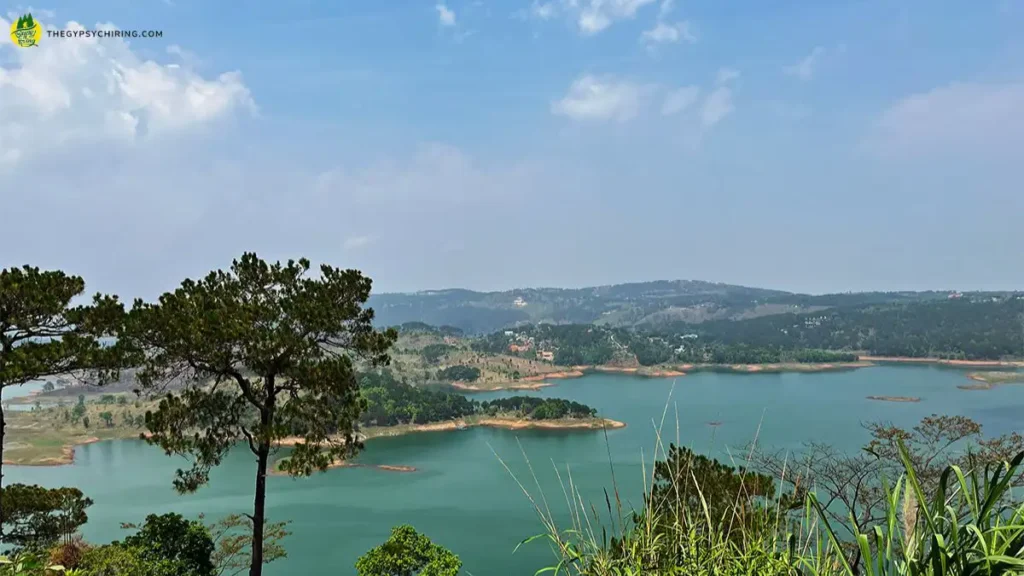
The Guwahati to Shillong Highway is known for its well-maintained curvy road and scenic views. I often stopped at spots, where the scenery seemed perfect.
After crossing Umiam Lake, the temperature cooled down, welcoming me to Shillong with a soothing breeze.
As the motorcycle wasn’t equipped with a the phone holder, I had to constantly stop at certain road junctions, to confirm if I was on the right path.
The Googe Map location of Mawphlang Village showed another 27 km and about 56 minutes to the village from Shillong.
By the time I entered the road to Mawphlang from the junction of Shillong-Mawsynram Road, it was already dark. The weather turned fully foggy with lesser visibility and a slight drizzle.
Through the dense fog, with raindrops visible through the rays of the motorcycle headlight, I could see a gate indicating the end of the road and no passersby on the road.
I realized I still hadn’t found a homestay for the night or figured out my plan for the trek. Luckily, the Mawphlang Sacred Forest entry point hut was still open.
Greeting them, I asked, “Are there any homestays in the village? I am planning to do the David Scott Trail trek tomorrow.”
Among the 4 individuals in the entry hut, a young voice replied, “You can stay in our homestay, it is John Myrthng Homestay.”
His name was Kerri Mame. His family runs a homestay located near the starting point of the David Scott Trail.
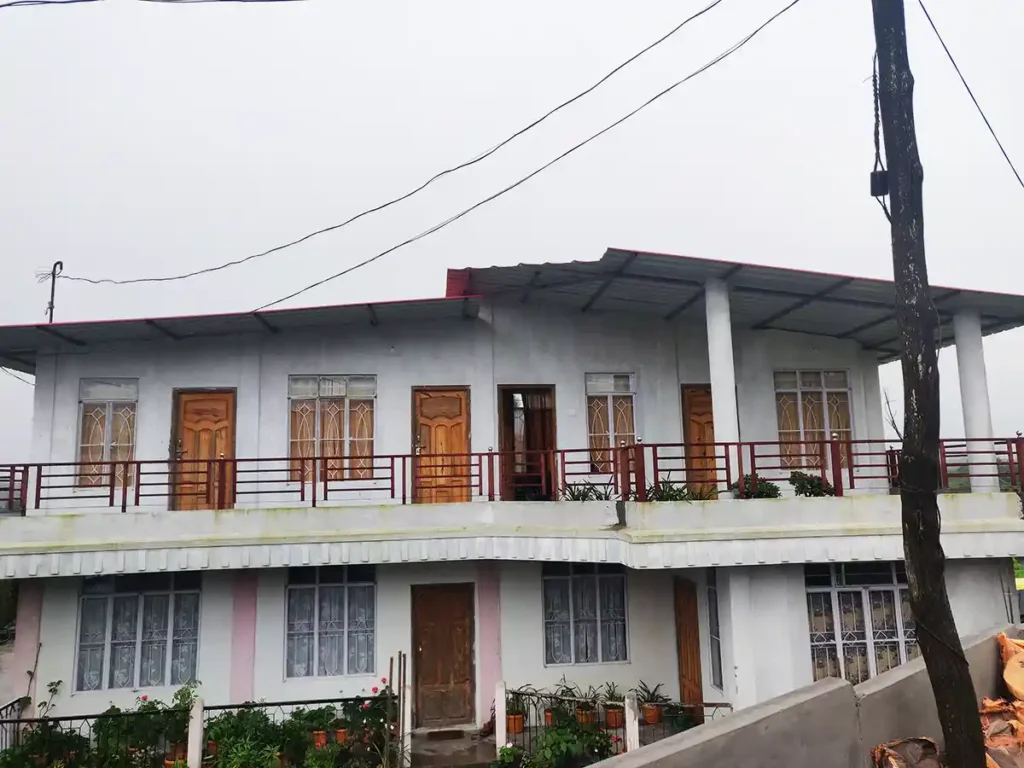
After sipping a cup of tea, we went to buy a few snacks for the trek the next day.
The drizzle was turning into heavier raindrops. Luckily I carried a poncho.
The ambience of freshly wet narrow village roads, a small shop light’s reflection on the road, and the chill breeze – beautiful it was!
Why I couldn’t do the David Scott Trail Trek
The David Scott Trail Trek starts from Mawphlang and ends in Mad-Mawphlang near Sohra (Cherrapunji), ahead of Mawk Dympep Valley ( the zip-line area you cross on your way from Shillong to Sohra).
It was 100 km trail started by a British administrator from Meghalaya to Bangladesh during the 1800s for trade. Now it is a 16 km hiking trail.
After discussing with Kerri and his friends, we finalized that we would start the David Scott trail trek around 7 am the next day. His friend would ride the bike and wait at Mad-Mawphlang, the end point of the trek on the other side.
Hoping that the rain would stop and the drizzle wouldn’t turn into heavy rain, I slept.
The next morning, I woke up around 4 am with the sound of rain drops that poured with all its strength. Praying that it would stop, I took a nap.
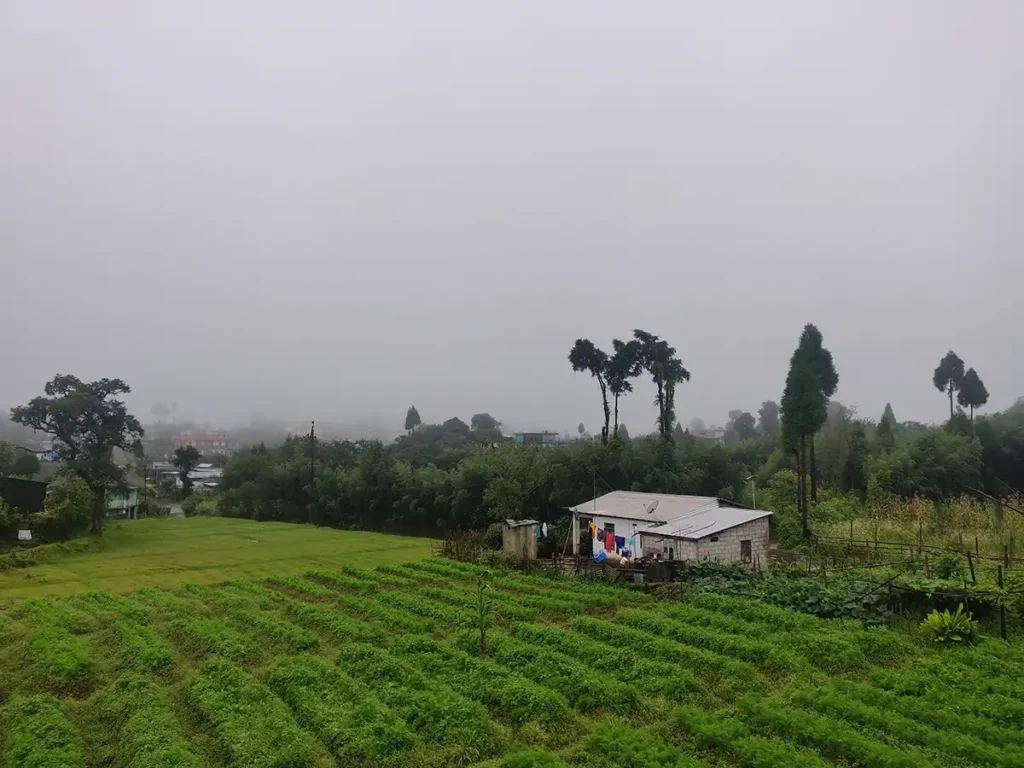
Around 6 am, the rain poured even more. Apparently, my prayers weren’t answered. Beyond the vegetable garden, the village houses could hardly be seen.
We waited and waited.. Unfortunately, I accepted what the nature offered. That is to enjoy the rain and cancel the David Scott Trail this time.
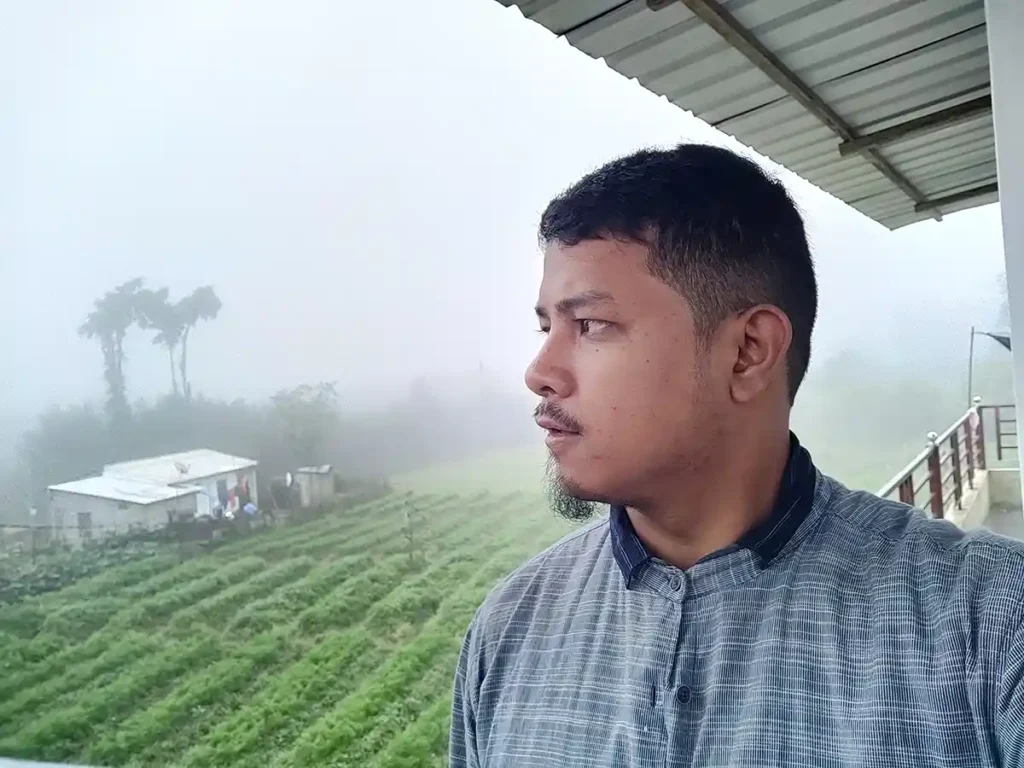
I ended up visiting the Sacred Forest
After much discussions with Kerri, instead of the David Scott Trail, I ended up visiting the Mawphlang Sacred Forest.
We started our ride from his homestay to the entry ticket spot and eventually through the curvy roads till the wooden sign board of Mawphlang Sacred Grove. I loved how we were greeted by some clouds during this short ride.
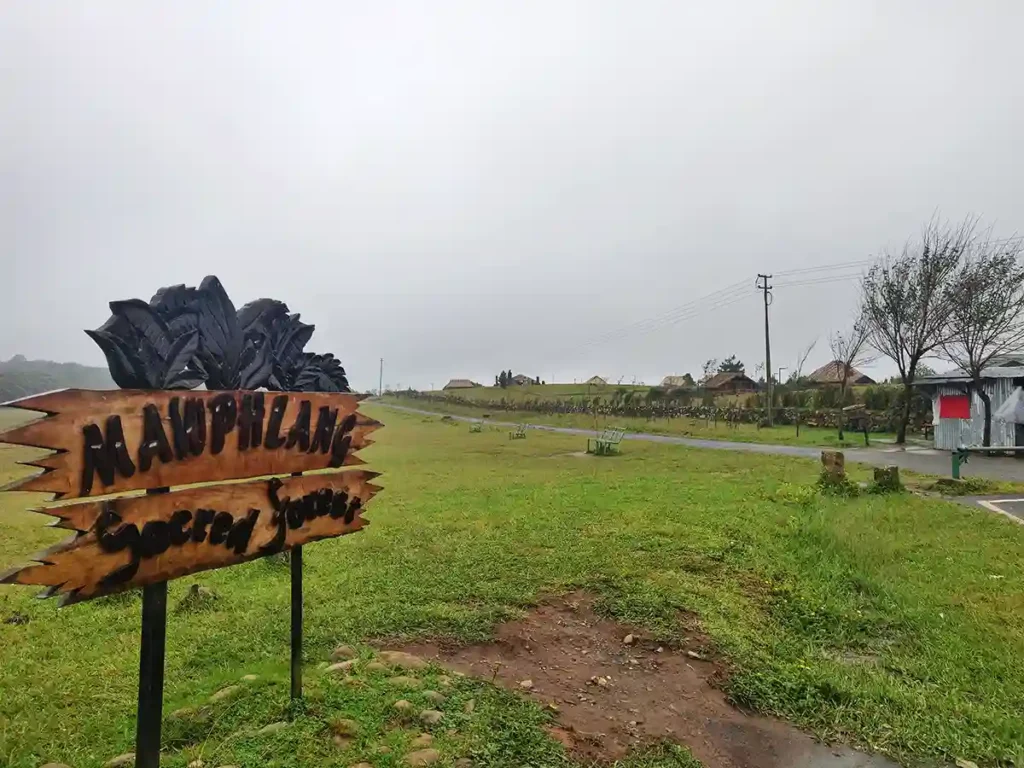
I remember reading about Mawphlang Sacred Grove in my Environmental Science school book. It shared how the cultural beliefs and customs of the Khasi ethnic group of Meghalaya has been protecting the forests.
Now, to see the forest in person, and learn about the folklore and beliefs from a local Khasi friend is a blessing.
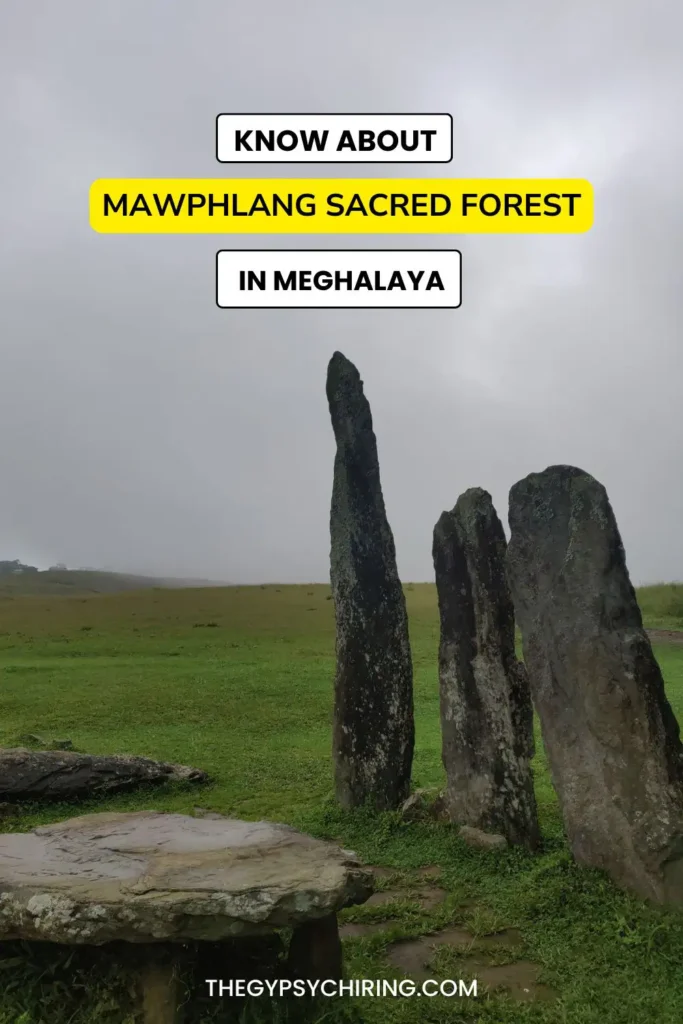
I started following Kerri’s steps towards the forest. Just before the entrance, to the right there were three monoliths and a table like stone. This reminded me of my Archaeology class, where the first is called Menhirs and the latter Dolmen.
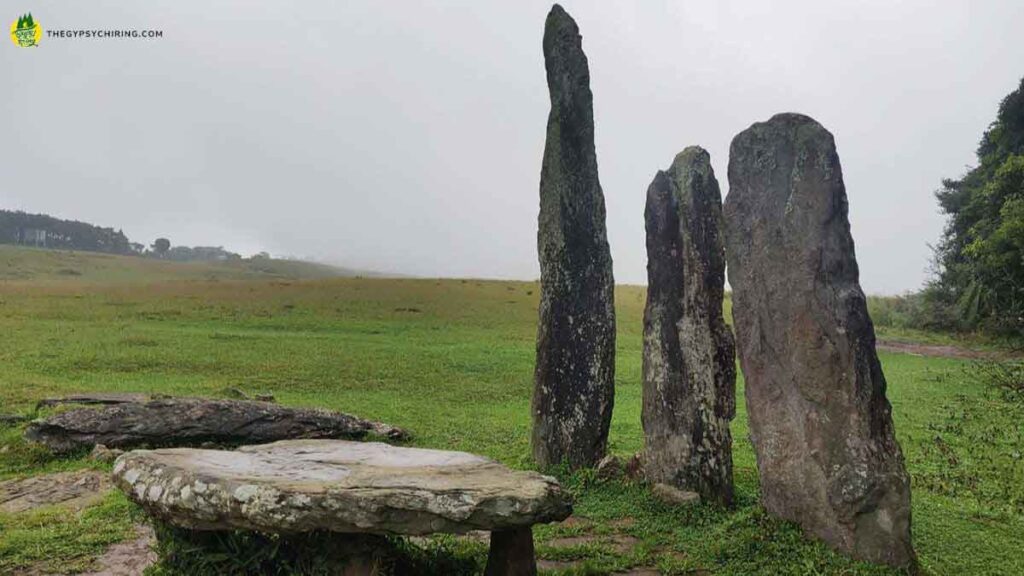
At this spot, the locals offer their prayers to the forest God before entering the forest. We prayed too.
The Khasis believe that these forest are home to the deities like Ryngkew and Basa who protect them and the forest.
Their indigenous belief systems like Seng Khasi and Niam Tre reflect their tradition for the conservation of forests.
The Sacred Grove has three parts.
Laitdyrkhang, the oldest forest with tallest of trees.
Phiephandi, the middle, where tourists generally taken to.
Law Nongkynrih is the new extended forest area to protect the old sacred forest and also for the use of medicinal plants.
In Khasi, Law Kyntang refers to sacred groves. This law kyntang – “Mawphlang Sacred Grove” is named after and belongs to the Lyngdoh Clan of the Khasi Ethnic Group of Meghalaya.
The Lyngdoh Clan are the priestly and ruling clan of the ancient kingdom of Mawphlang which is still prevalent today.
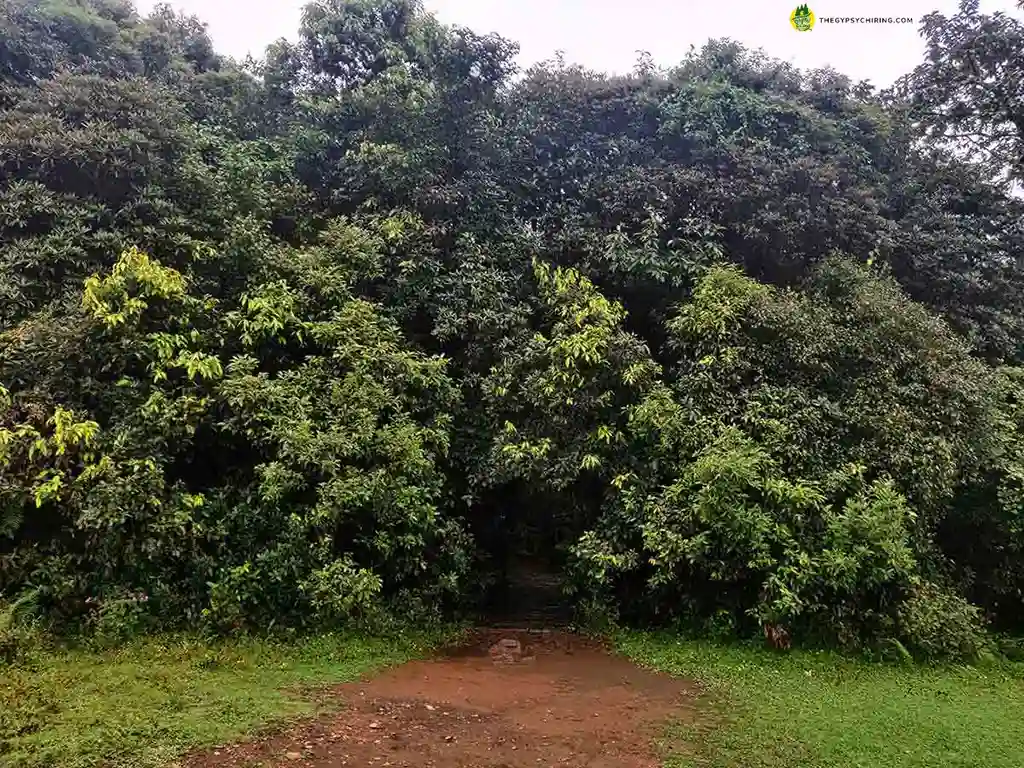
Doesn’t the entrance look like a portal to another universe? Somewhat like the portal to the forest kingdom in the Chronicles of Narnia movie?
Kerri forewarned that nothing can be taken from the forest, not even a leaf or small twigs. Plucking of flowers or fruits and and felling of trees are prohibited too.
According to their culture, harming the forest and not following the rules would offend the protector deity Basa, leading to harm in one way or the other.
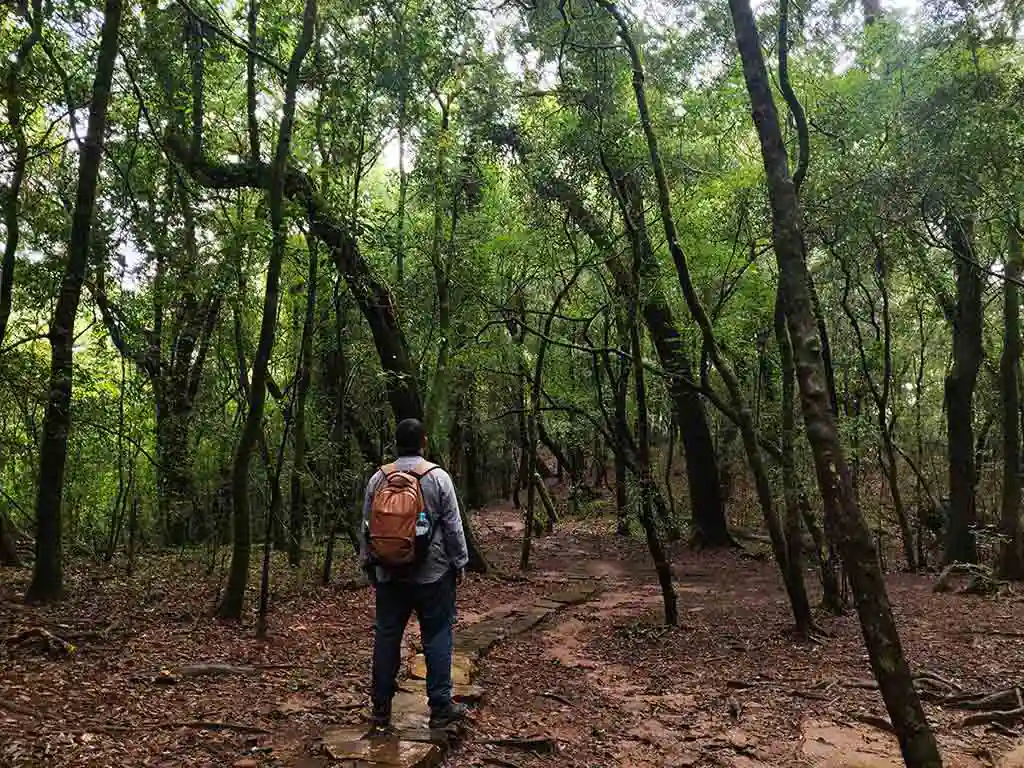
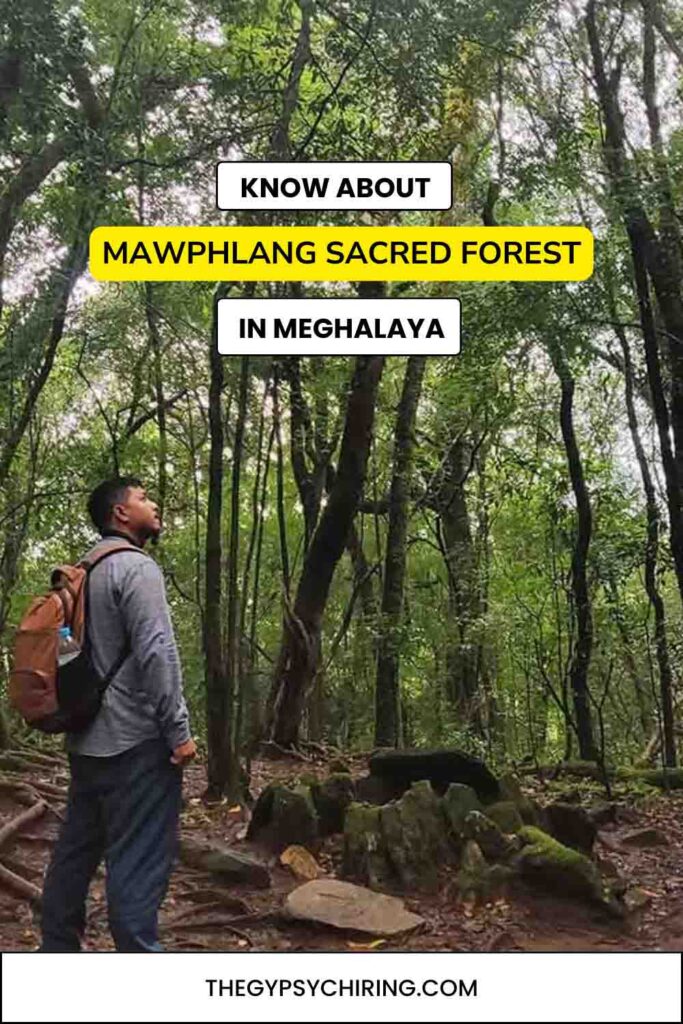
Beyond that little gate of entrance lies this (above) beautiful pathway.
Midway through the trail, he introduced me to a tall and old Rudraksha Tree (Elaeocarpus ganitrus) that grows commonly here.
Rudkrakshas are sacred seeds for the Hindus. They considered it during meditation, for protection and has spiritual significance.
As we walked further, I saw a single transparent threaded leaf on a green tree trunk, varied colour of mushrooms, and holes in trees perhaps created by birds.
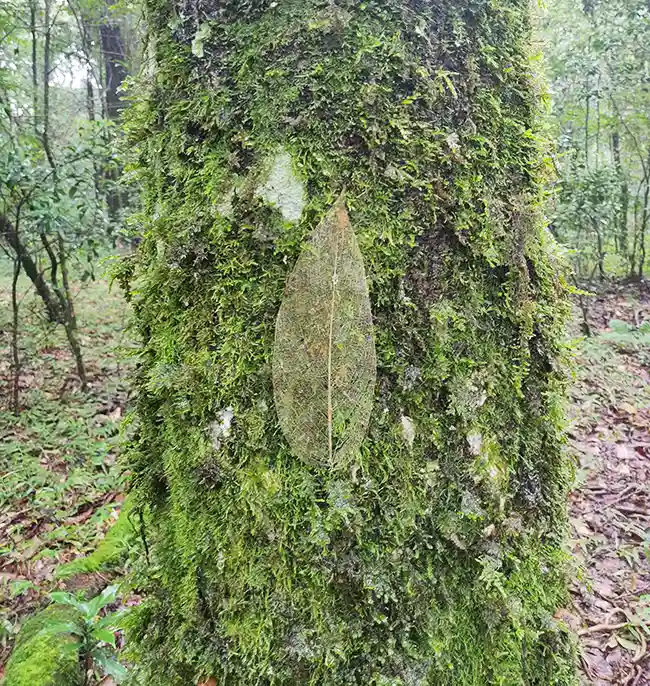
On the side of the trail were small erected monoliths, possibly marking as boundary stones.
At the end of those stones, was the area where the main rituals were performed traditionally during ancient times.
For generations, rituals linked to these forests shaped community life. Elders and chiefs would gather to perform ceremonies before important decisions or during times of crisis.
These rituals were once held inside the forests but are now conducted near monoliths that mark sacred spaces.
The last major ritual within a grove took place during the famine of 1959, when bulls were sacrificed.
Nowadays, the practice continues in a simpler form with hens and roosters offered during annual ceremonies.
It is believed that the forest deity Basa reveals itself during these rituals at Mawphlang Sacred Grove, often in the form of a clouded leopard or a snake.
The leopard is seen as a protector in moments of danger, while the snake is believed to appear as a sign that something is wrong.
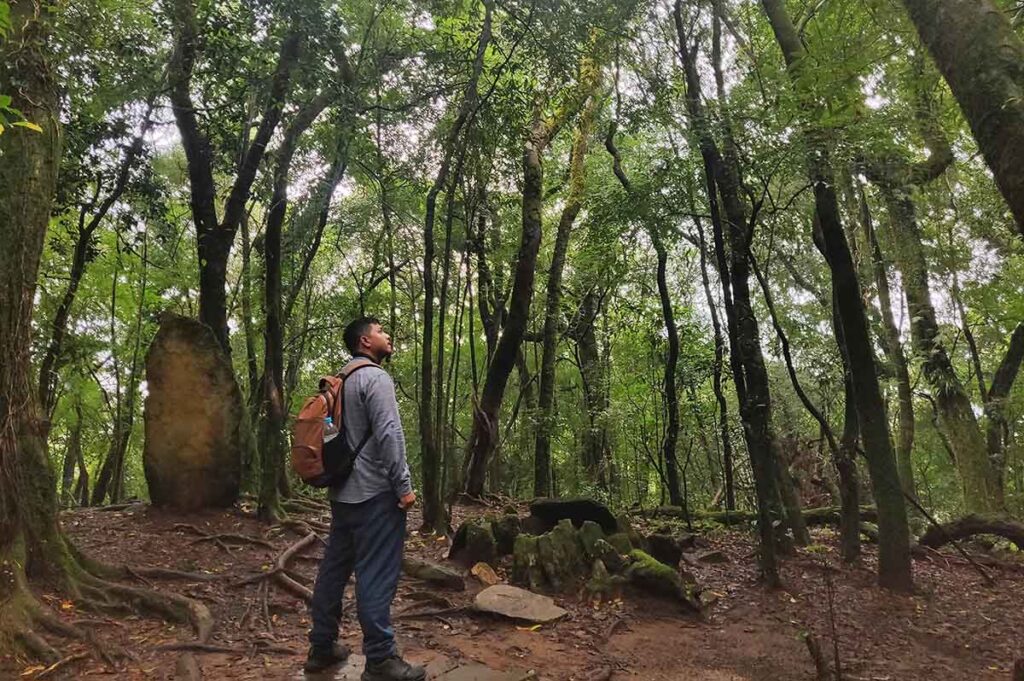
We stood in silence for few minutes. I could hear birds singing, the crickets cheering and rain droplets falling from one leaf to another.
Out of nowhere, a white dog appeared and ran alongside us through the trees. One of those little serendipitous moments, don’t you think?

With smiles and gratitude, we bade goodbye to a place that literally felt magical because of the misty weather, slight drizzle, and the Mawphlang Sacred Grove Story and folklore.
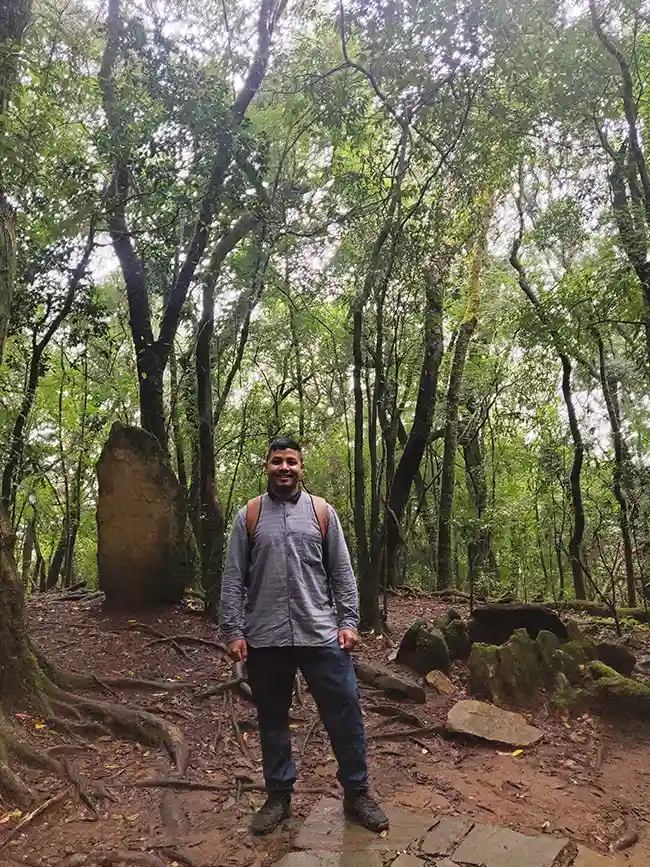
Having studied Anthropology, it’s moments like these – learning about megaliths, local folklore, culture, and sustainable ways of living – that bring me the truest kind of happiness.
I must say, the temperature was even cooler inside the sacred grove than when we came out of it. Divine Mother Nature!
Returning to the parking lot, the unique bamboo hut like structures attracted me. I asked Kerri, “What is this place?”. He replied, “Oh, this is our Khasi Heritage Village.”
Yes, like the Kisama Heritage Village where the famous Hornbill Festival of Nagaland is celebrated, Meghalaya also has a heritage festival where the Khasi Culture is showcased.
In 2024, the Monolith Festival was organised at the Khasi Heritage Village here in Mawphlang.
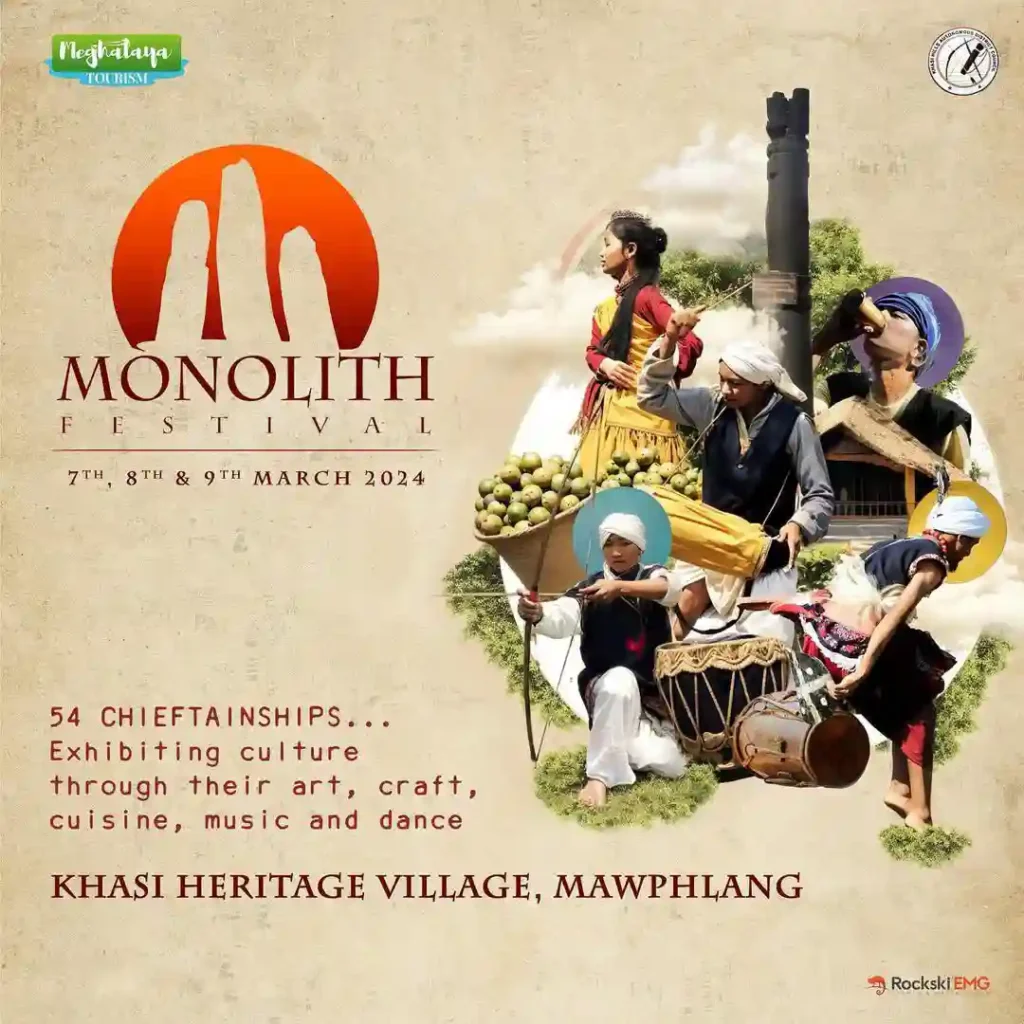
You can check the official account of Monolith Festival 2024 to know more about the festival.
Here are a few photos I clicked of the Heritage Village.
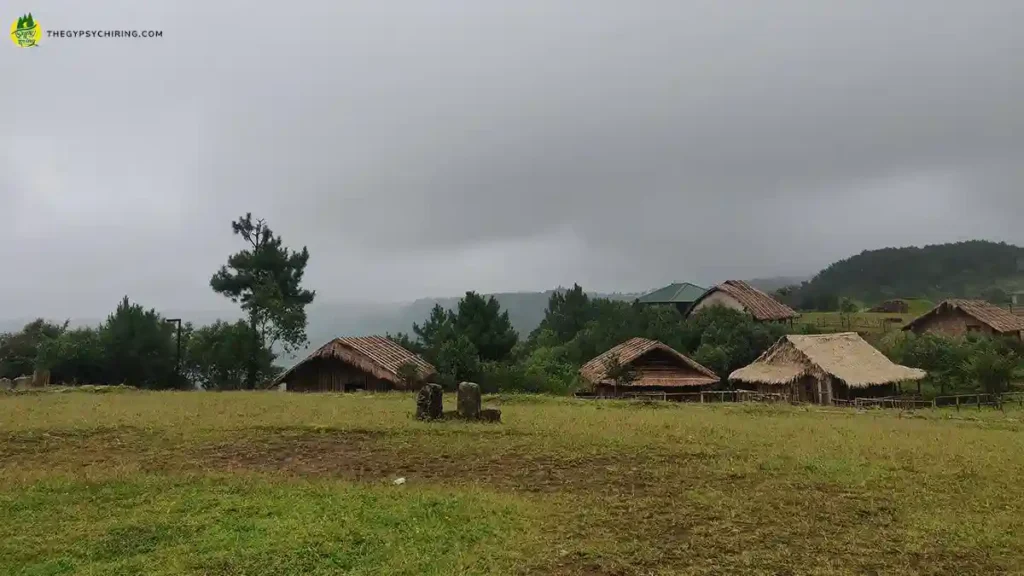
I am glad they organized the Monolith Festival at the Mawphlang Heritage Village 2024. I watched a few videos and photos it – filled with energetic cultural performances, and traditional decorations.
Unfortunately, I couldn’t attend it due to other commitments.
I hope they organize it again.
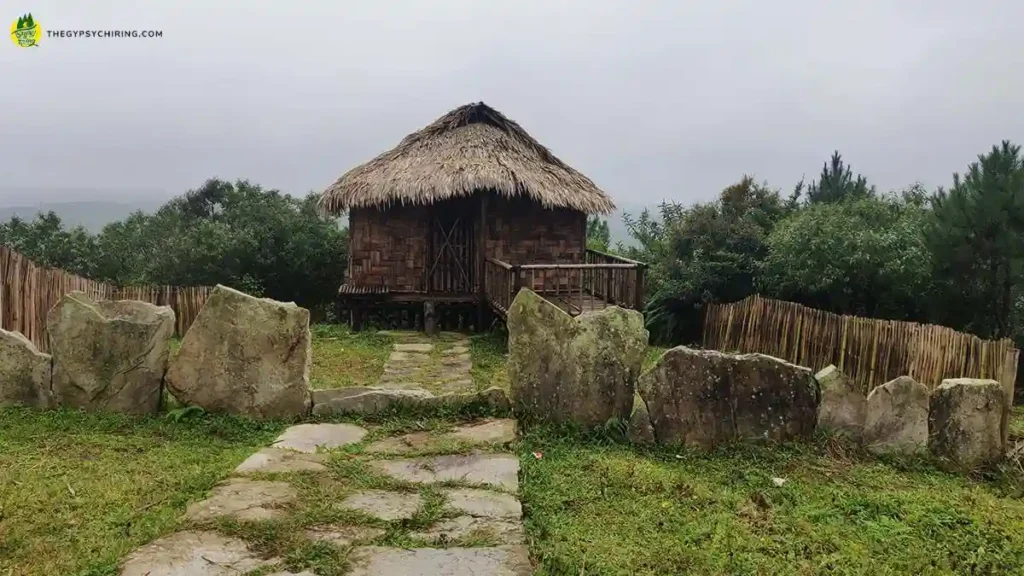
During my visit to Khasi Heritage Village, the huts were under re-construction. Perhaps, for the Monolith Festival.
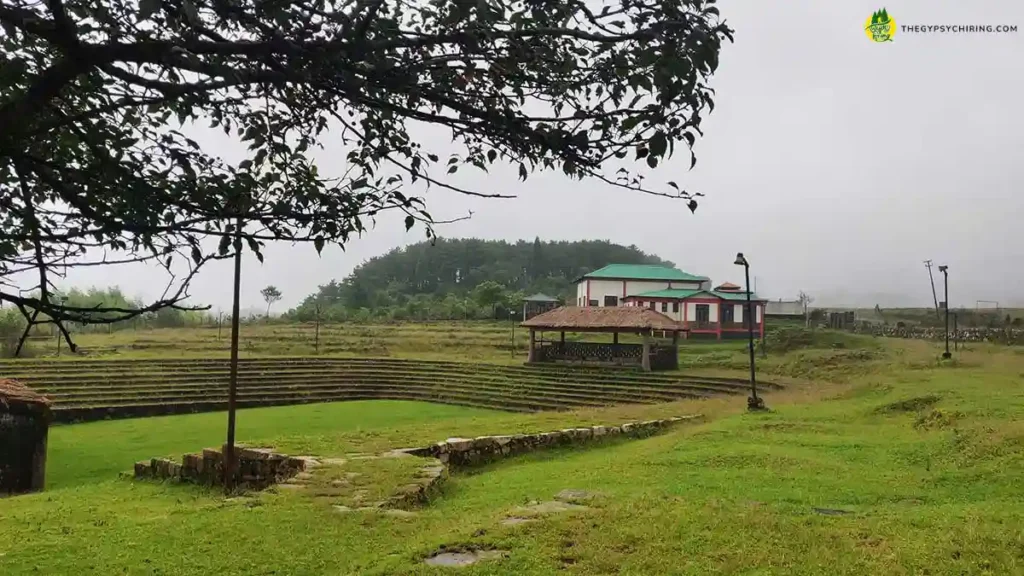
The Goodbye
With a happy and contented heart, yet slightly heavy and misty, I looked at the Mawphlang Sacred Forest one last time.
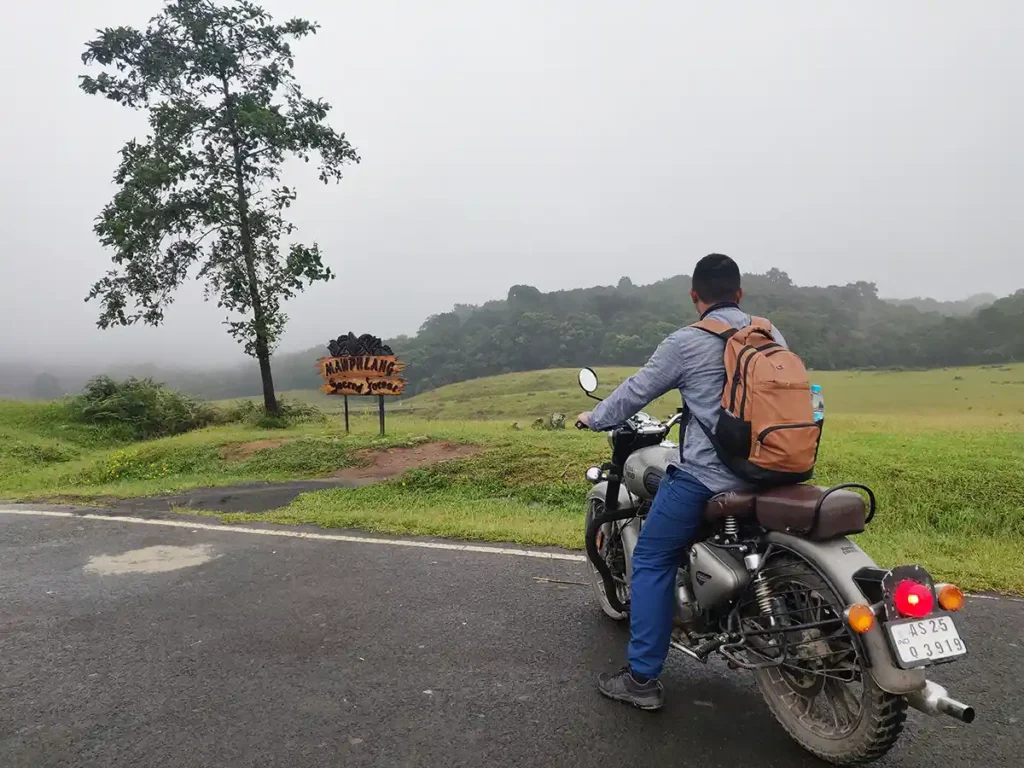
I missed out on the streams, bridges, and forest trails of the David Scott Trail, but the quiet calm of the Mawphlang Sacred Forest made up for it in its own way. And somewhere along the way, I made a new friend – Kerri.
I now have a reason to come back to Mawphlang again, to meet him, attend the Monolith Festival in the Heritage Village and complete the David Scott Trail trek.
Guess what, I did co-incidentally meet him when I was climbing up the stairs during the Double Decker Living Root Bridge Trek in Sohra around September 2024. After 2 years, Lucky yeah!
How to Reach Mawphlang?
Mawphlang Sacred Forest, also known as Mawphlang Sacred Grove is in Mawphlang Village located at a distance of about 27 km from Shillong in Meghalaya, India.
From Shillong, it took me an hour to reach Mawphlang Village on my rented motorcycle.
To reach Mawphlang, you can either come on a shared taxi or rent a vehicle from Shillong town.
Shillong has an airport at Umroi, some 30 km from the main town.
For trains, you can come to Guwahati Railway Station and hire or go on a shared taxi to Shillong. It will take 2-3 hours to reach Shillong.
Don’t miss these things to do in Mawphlang
1. Go for the Mawphlang Sacred Forest Guided Hike.
2. Visit the Mawphlang Heritage Village
3. Do the David Scott Trail Trek
What is the Best Time to Visit Mawphlang Forest?
Mawphlang Sacred Forest can be visited all year round. I visited it in September, it was still raining, and I loved the experience.
However, if you do not like rain much, October to April – the dry season would be better.
______
I hope you found this travel story of mine and the travel guide on Mawphlang Sacred Forest helpful.
Share this with your friends and family, with whom you want to visit it.
Don’t miss my newsletters where I share updates on Northeast India’s culture and adventure – tips from your local friend. You can subscribe it here.
I have kept this site Ads free since September 2025 so that you have a better reading experience. You can support me by “Buying Me a Cup of Coffee.”
Note: Kindly do not copy photos and use without permission. Or if you use, add this blog post link as credits in the source.


An urge for visiting has already popping up
Like visiting the place through your words ❤️