Are you planning to attend Oktoberfest in Munich, Germany?
If yes, this Oktoberfest travel guide is for you.
Oktoberfest in Munich attracts over six million visitors each year. Locals call it “Wiesn” and see it as an important tradition, not just a beer party.
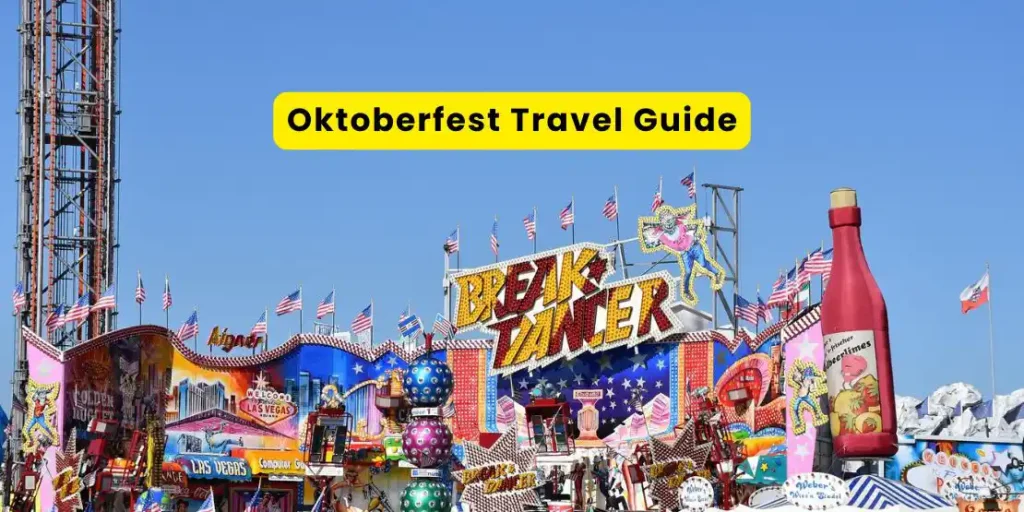
If you’re going, visit on a weekday for smaller crowds, avoid the busy “Italian weekend,” and choose tents that locals prefer.
Dress properly by wearing real lederhosen or a dirndl instead of costumes.
Ask for a “mass” of beer, not a stein, and learn the popular song “Ein Prosit,” which everyone sings throughout the festival.
By following these simple tips, you can avoid common tourist mistakes and enjoy a more authentic Oktoberfest experience.
Best Time to Visit Oktoberfest
If you want to skip the crowds and enjoy Oktoberfest with a more genuine local feel, go on a weekday.
Things are much calmer, the atmosphere is less frantic, and you’ll blend in with Munich regulars who usually save their own visit for these quieter days.
One weekend to watch out for is the so-called “Italian weekend,” the festival’s second weekend. Here’s when Munich gets a cheerful influx of visitors from Italy, complete with their own police and medics from South Tyrol.
The tents fill up to bursting, queues stretch out the door, and even the most enthusiastic locals often stay well away until the coast is clear. Unless you’re keen to experience Oktoberfest at max capacity, you might want to steer clear too.
Families should keep Tuesdays in mind. That’s official Family Day, where you’ll find discounted rides, extra children’s activities, and an area called “Familienplatzl,” set up just for kids.
This can give your visit a more relaxed pace and a little extra magic if you’ve got younger festival-goers in tow.
Timing really is everything at Oktoberfest. A well-chosen day can mean easier tent access, shorter queues, and much more time soaking up the local scene.
Choosing Your Beer Tent Wisely
With 34 beer tents to pick from at Oktoberfest, each one gives you a different atmosphere.
The 14 big tents and 20 smaller ones hold anywhere between 5,000 and 11,000 people, so it pays to do a little homework instead of just wandering in at random.
Some tents, like the ones known as “Australian” or “Italian”, usually fill up with visitors.
Others, like the Augustiner, trend more local and see fewer tourists, so you’re more likely to hear Bavarian accents than English chatter.
Think about what you want from your Oktoberfest experience. If you’re not keen on crowds or prefer a spot that feels family-friendly, try the “Weinzelt”—it’s calmer, and it happens to be the only tent serving up wine.
On Tuesdays, families get discounts in the Augustiner tent, which can make a big difference if you’ve got kids with you.
Food lovers gravitate to the smaller tents, many of which specialise in certain dishes.
The Ochsenbraterei is famous for its roast ox, and there are places known for their fish or pork. If it’s all about the food for you, make your decision with your appetite in mind.
For a more local experience, steer clear of the obvious tourist magnets and find those where locals gather.
A bit of research before you go can help match your mood to a tent.
Whether your focus is the food, the beer, or just soaking up genuine Bavarian company, the right tent can make all the difference to your festival.
Local Etiquette and Traditions
1. What to Wear during Oktoberfest?
Wearing a dirndl or lederhosen is practically a rite of passage at Oktoberfest if you want to truly blend in with the locals.
These outfits aren’t just for show—they carry a real sense of pride and tradition. Putting them on is a way of connecting with the festival’s roots and showing a bit of respect for Bavarian culture.
For men, proper lederhosen are made from real leather, so they last for years and pick up character with each wear.
Dirndls, popular with women, come in all sorts of fabrics and colours, usually with fine details that make each one a bit special.
Ladies, a quick tip: always keep your dirndl to knee-length or longer, and don’t forget the apron bow rules!
Bow on the right means you’re spoken for, bow on the left signals you’re single—people genuinely pay attention to this.
Buying an authentic outfit is worth the expense, often surpassing 100 euros. Not only will it look and feel better, but you won’t stick out for the wrong reasons.
Locals usually spot cheap, over-the-top versions right away, and nobody wants to look like they’re there for a laugh at a costume party.
If it’s your first time, consider picking up your outfit from one of the shops in Munich where you can get some help with fit and style.
It also helps support local businesses and gives you an excuse to hunt for that perfect, comfortable fit.
Taking time to choose carefully helps you avoid any fashion mishaps, guarantees you’ll feel confident, and lets you soak up the atmosphere like you’ve been coming for years.
2. Drinking Protocols
Getting the beer basics right at Oktoberfest is half the fun. Beer is served only in a “mass”, which is a hefty one-litre glass mug.
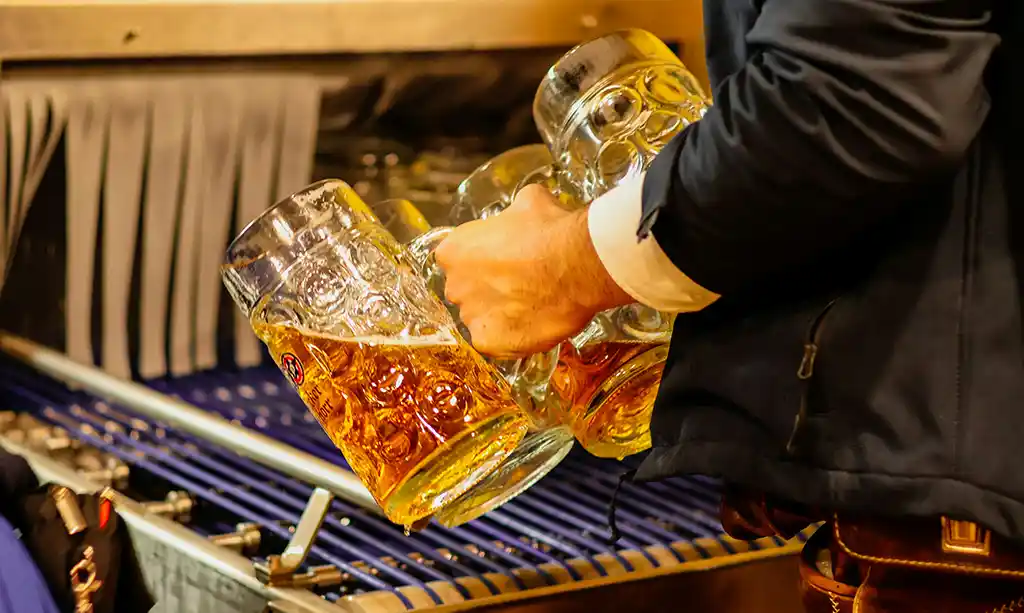
Don’t call it a “stein”—that’s a tourist giveaway. When your drink arrives, hold it the proper way: slip your hand through the handle and keep your thumb resting on top.
This isn’t just tradition, it actually stops your hand from getting tired during a long night of toasts.
Speaking of toasts, these are taken very seriously. When someone shouts “Prost!”, join in with real enthusiasm.
Clink glasses at the base, keep firm eye contact, and say “Prost!” right along with everyone else. It’s not just for show; people genuinely notice, and it’s said to bring good luck.
Plus, it’s these moments of shared laughter and eye contact that make you part of the group—locals and newcomers alike.
Small details like these let you slip into the local rhythm. You’ll find yourself welcomed, with even the most seasoned Munich drinkers happy to raise their glass with you by the end of the night.
3. Making New Friends
There’s even a special word for making friends at Oktoberfest: “wiesnbekanntschaften.” You’ll hear it tossed around in the tents, and for good reason.
Meeting new people forms a big part of what makes the festival so memorable.
Since you’re likely to be sharing a table with complete strangers, it’s almost impossible not to get swept up in conversation—especially after you’ve worked up the courage to ask, “Ist dieser Platz frei?” or “Is this seat taken?”
That simple question opens the door to stories, laughs, and maybe a few new contacts for your phone.
This mix of communal tables, lively music, and massive mugs of beer breaks the ice in ways other social events can only dream of.
Before you know it, you’ll be exchanging stories and songs with people from Munich, Australia, and everywhere in between.
So, get into the spirit. Say hello, share a toast, and don’t hold back—at Oktoberfest, new friends are just a seat away.
If you’re up for chatting and joining in, you might come away with more than just memories; you could end up with friendships that last long after your flight home.
What to Eat during Oktoberfest?
Oktoberfest wouldn’t be the same without its classic Bavarian dishes, and there’s plenty worth sampling between rounds of beer.
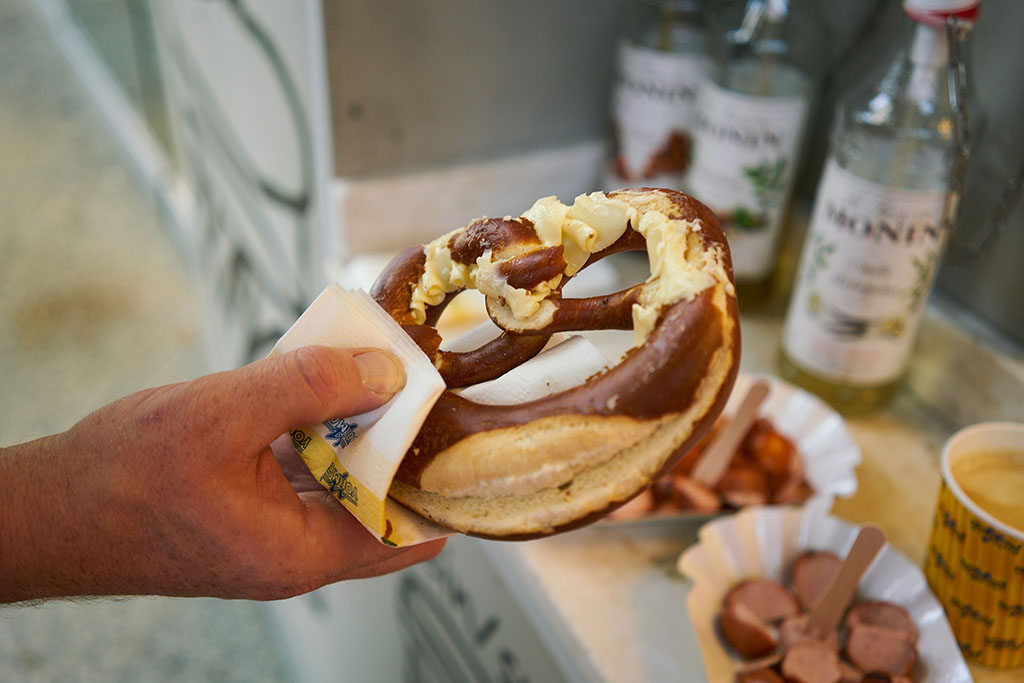
Pretzels, or “wiesn brezn”, are the go-to snack—massive, salty, and ideal with a cold drink in hand. You’ll spot them at stands around the festival, an instant fix if you’re hungry on the move.
If you’re leaning towards something more filling, head into the beer tents. In the Ochsenbraterei tent, the ox roast takes centre stage, both for the spectacle of the spit and the rich, smoky flavours. Prefer pork?
The Schützen tent’s roast suckling pig with malty beer sauce and warm potato salad is genuine comfort food and hugely popular with locals.
For seafood lovers, Fischer Vroni stands out. With 16 types of grilled fish on offer, there’s enough choice to please anyone keen to break up all that meat.
Trying different foods in the various tents really lets you tap into Bavaria’s food culture. Each tent serves up its own vibes, from rustic feasting halls to lighter, more relaxed spaces.
Spending time exploring them through a fork and knife isn’t just filling—it’s one of the most memorable ways to get a sense of what Oktoberfest means to Munich.
Practical Tips
Bringing cash to Oktoberfest is a must, since card payments are still hit and miss at the festival.
A few bars might take cards, but don’t count on it—nothing slows down the celebration faster than a malfunctioning machine or waiting in line behind someone whose card won’t work.
Inside the tents, staff take cash only, so if you want your next round of drinks or food without hassle, have euros ready.
ATMs are dotted around the grounds, but the queues are famously long. Save yourself the trouble and withdraw what you need before you arrive.
You’ll want to keep an eye on your spending. The costs add up quickly: a beer usually sets you back about 11 euros, and you’ll pay a 2 euro deposit (the pfand) for your glass, which helps prevent people pocketing them as souvenirs.
Meals inside the tents range from 12 to 15 euros. If you’re hoping to spend less, grab snacks from outdoor food stalls—pretzels and wurst generally go for about 4 euros, and soft drinks are closer to 8 euros. Remember, beer is only served in the tents.
Having a rough plan for your spending helps you enjoy the festival without that sinking feeling from an emptied wallet by the end of the day.
So, add Oktoberfest to your Europe trip itinerary, and experience something German.
Share this article with someone who talked with you about going to Oktoberfest.
Danke!