In this article, we will discuss how the pressure to post on social media is ruining travel and the steps to reclaim meaningful travel.
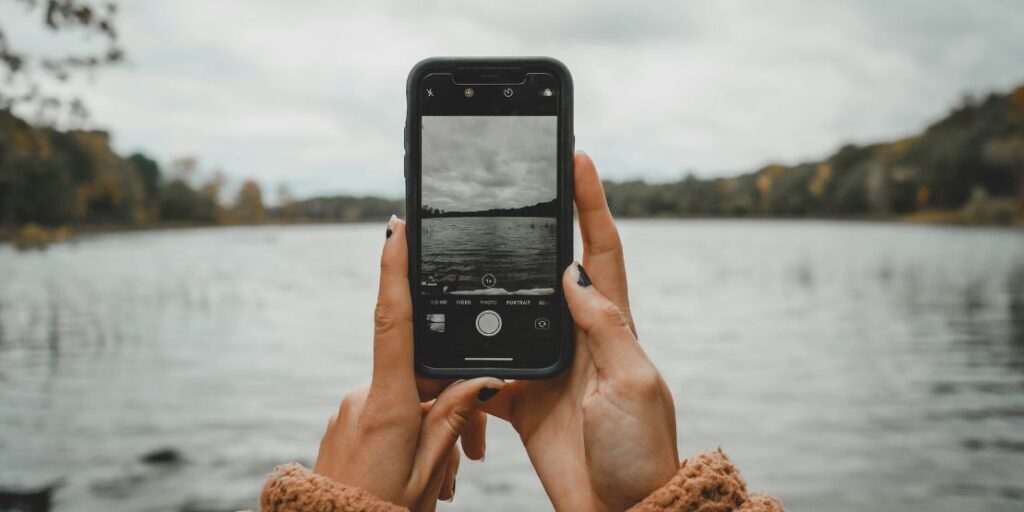
Can you imagine experiencing the world around you solely through the lens of your camera?
If even imagining that made you feel a little uneasy, consider travelers who walk around with a smartphone right in front of their faces.
It’s unfortunate that this is the modern paradox of traveling.
Close your eyes and think about vibrant destinations like Valparaiso, Chile, with its bohemian charm.
In 2024, Chile welcomed a record 5 million+ foreign tourists. This was a massive 40.4% rise over the previous year. Newer destinations like Valparaiso are increasingly being sought after.
It’s true that every corner of such places begs to be photographed.
That said, it doesn’t take much to start trading the soul of travel for attractive social media feeds.
Once the best moments are arrested in pixels, you might wake up to the horror of missing the spontaneous moment entirely.
This article will explore what happens when capturing moments is overdone during travel.
You will also learn practical strategies to balance digital engagement and genuine experiences.
The Modern Traveler and the Social Media Paradox
At the dawn of the 2000s, travel prep was worlds apart from what it is like today. Most folks depended on travel magazines, printed maps, and seasoned agents.
As social networks took off, a major paradigm shift occurred.
These days, travelers hardly set out on a journey simply because a magazine inspired them.
Many carve out their travel plans based on what holds the highest potential for picture-perfect moments.
Even destinations are selected from the same viewpoint.
A 2025 survey conducted on adults aged 18-40 years discovered that Facebook, YouTube, and Instagram shaped the destinations chosen for traveling.
Well, that’s the power of visual appeal and influencer recommendations in a world of glossy social feeds.
While scrolling through any of the major social platforms, you may have come across a ton of travel-related posts.
That isn’t coincidental, given the fact that millions of such hashtags exist.
Particularly, tags likewanderlust and travelgram are becoming brochures that users turn to for travel decision-making.
Statista shares that at least 48% of travelers worldwide use social media as their main source of travel inspiration.
Specific destinations hold a greater tourist appeal, all in the name of aesthetics.
Let’s unpack that a little:
↳ Cappadocia, Turkey:
- Viral Instagram reels lie behind this place’s popularity.
- As travelers fly into Nevsehir Kapadokya Airport or Kayseri Airport, many take local shuttle buses or private taxis to Göreme and the surrounding valleys.
- Why? For the most captivating social media imagery!
↳ Santorini, Greece:
- No fluff here, the rich white and blue skyline of Oia against the Caldera Sea is among the most Instagrammed scenes in the world.
- The photogenic architecture and stunning sunset shape every travel blueprint that begins at the Santorini (Thira) National Airport.
↳ Bali, Indonesia:
- A place where 6 million+ visitors showed up in 2025, Bali’s lush rice terraces and infinity pools have gained worldwide attention, mainly through social media posts.
- People pour in en masse through Ngurah Rai International Airport and rely on local taxis to explore Instagram-worthy spots.
This intersection of visual inspiration and destination choice is what we call the social media paradox of travel.
On the one hand, social platforms have made every possible destination accessible.
On the other hand, snapping pics has officially taken the front seat rather than experiencing cultural depth.
It’s not rare to find travelers who choose a destination, not for its heritage, but because it looks incredible on screen.
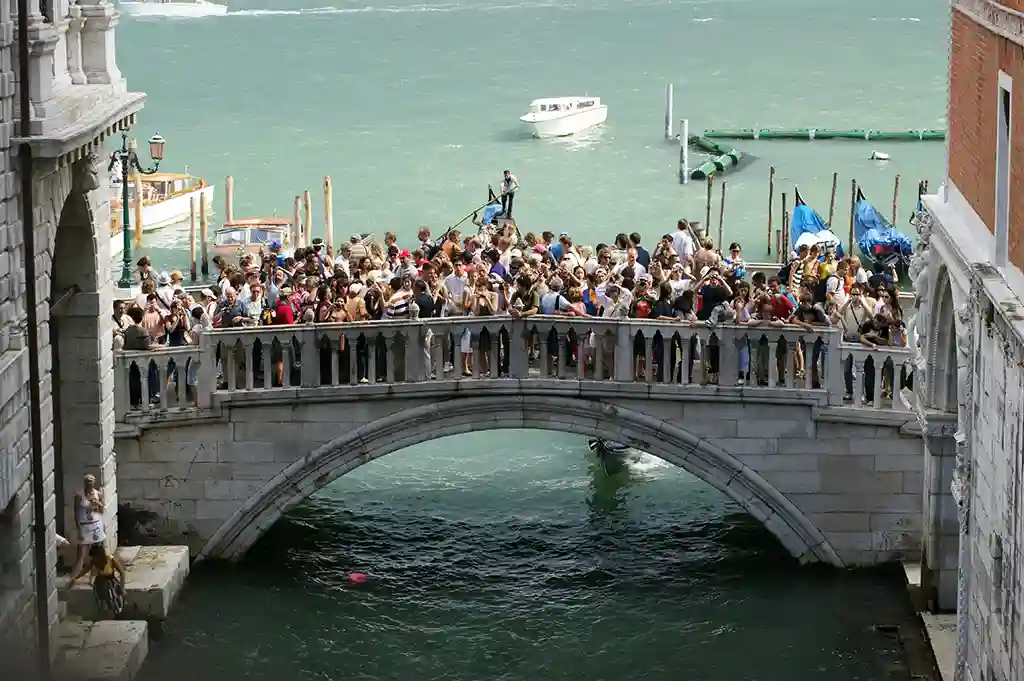
Now this fascination even drives over-tourism. No wonder Bali’s beaches and Italy’s Cinque Terre struggle to manage crowds!
Are we not traveling at the expense of the moments meant to be remembered?
The Cost of Always Documenting Travel Experiences
Have you ever felt an unspoken expectation to document your travel moments?
It’s almost like the minute you arrive at a scenic spot, you have no time to take it in.
You must capture the best possible shots for maximum likes and engagement on social media!
Well, that is exactly what the pressure to post looks like.
This can even change how travelers experience time, emotion, and rest while on the move.
Let’s know more into how content pressure has slowly eroded the soul of travel:
1. Fragmented Experiences
Earlier, journeys moved with a sense of continuity. Even if there were interruptions, they were always welcomed and enjoyed in the flow.
Today, the same moments are divided into capture windows. Travelers prioritize experiences based on which ones are the most “post-worthy.”
This explains why tourists tend to constantly pause just to take photos and record videos.
In a 2025 study, it was found that people experience significant psychological stress when sharing travel content online.
Real-time posting certainly costs in terms of natural travel flow and emotions.
“Wait! Let me get this shot right,” pretty much sums up the present soul of most itineraries.
2. Memory Becomes External and Less Vivid
Have you ever returned from a trip unable to remember even the most notable aspects vividly?
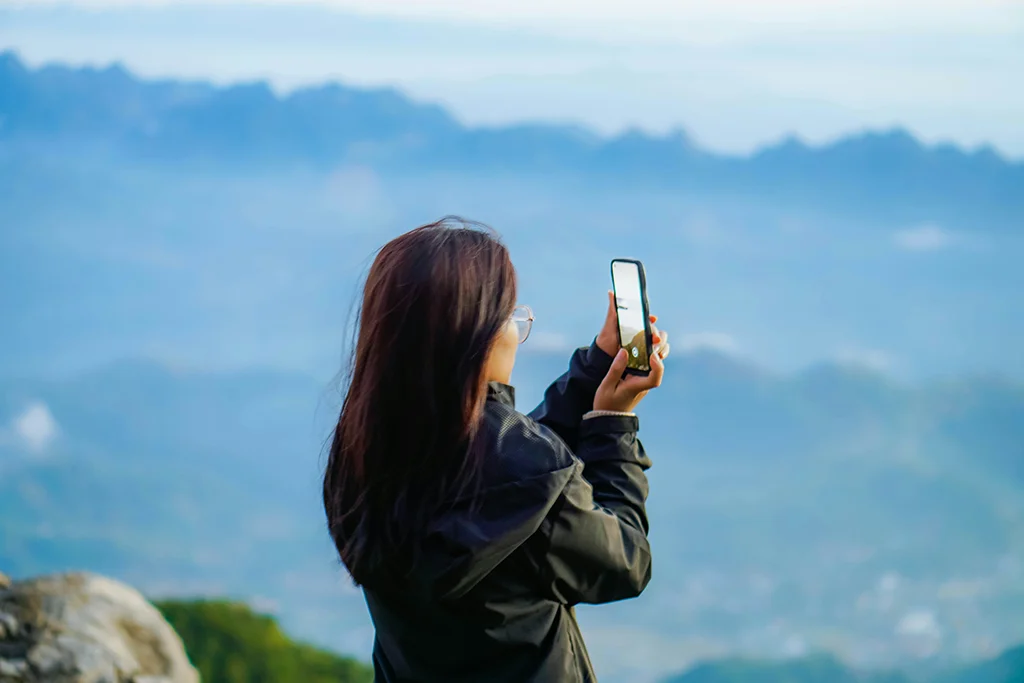
More than likely, those moments were marked by a camera in your hand, angling for the best shots. This is consistent with the fact that frequent documentation affects memory formation.
You trade sensory richness for self-presentation and social approval. That’s like outsourcing one’s travel memory to the phone.
The beauty of travel lies in the opportunity to reflect and savor the wonders of the world.
What use is it if one captures the best angles but fails to remember the smell of street food and the rush of neon lights?
3. Travel Becomes a Compulsion Rather Than a Choice
It’s only a matter of time before the pressure to document every moment attacks a traveler’s sense of agency.
For most people, it starts with the voluntary sharing of noteworthy moments. So far, so good. However, it seldom stays that way.
The posting process only becomes habitual and obligatory. Such a pattern is not limited to travel. Concerns associated with compulsive engagement have surfaced more broadly, as seen in allegations involved in the social media addiction lawsuit.
It’s difficult to disengage from social platforms as it is, especially for younger demographics. However, it’s insightful to know that even the platforms are designed to fuel constant use.
As TruLaw shares, companies intentionally manipulate algorithms without warning users of the associated health risks.
On the road, it may manifest itself as guilt for not posting and an inability to simply experience a place without documenting it.
4. Rest and Stillness Begin to Feel Like Failure
Travel is essentially among those few times when slow, unstructured routines are encouraged. Long, peaceful train rides and lazy afternoons all fall harmoniously into that rhythm.
The question is, can we say the same about this new era of social media travel? Probably not, since many travelers do not consider rest and stillness to be important.
Some may even view these as a waste of time because more content could be generated in the meantime, right?
That’s the language of anxiety-driven productivity at best. Any downtime is “utilized” to edit videos or map out more Instagram-worthy detours.
If that wasn’t exhausting to read, you’ve likely yielded to this pattern yourself.
Steps to Keep the Soul of Travel Intact – Meaningful travel
Now, it isn’t inherently harmful to document memories and share them with friends and family across social media.
Even travel bloggers can share short updates as a part of their journey. What you must be careful of is allowing content creation to dictate the travel experience.
Let’s look at some strategies that will help you keep the soul of travel intact.
They won’t discourage sharing, but will help you live in the moment as you enjoy the benefits of modern connectivity.
1. Disconnect intentionally
Reserve specific times to fully experience your surroundings.
Even during train and ferry rides, put your phone on airplane mode and soak in the aroma and noises that greet you along the way.
2. Be fully present and observe
The moment your hand moves towards the camera, pause and truly observe your surroundings.
Unhurried awareness makes memory sharp and strengthens emotional connection.
3. Limit posting windows
Restrain your posting to specific times of the day.
For instance, you can decide to post in the evenings after a full day of exploration.
4. Share, but in a meaningful way
You have to accept the fact that not all moments need to be recorded.
In turn, this will help you share moments that genuinely matter.
5. Become one with the local culture
This strategy involves experiencing a place first, capturing it later.
Join a cooking class or strike up conversations with residents.
This will help keep travel grounded in human connection, not online validation.
Summing it Up
On a final note, analog reflection is another great way to deepen your bond with your travel experiences.
In other words, maintain a journal that’s part reality and part soul whisper.
If art tugs at your heartstrings, spend some time sketching the outdoors. On that note, full-blown plein-air painting won’t hurt either!
Travel was never meant to come with a side of content pressure.
Some of the best moments are also raw and unfiltered, something no reel or video can accurately justify.
The algorithm will inevitably move on one day. What will remain is how the place truly made you feel.
That’s the kind of memory no post can ever replace.