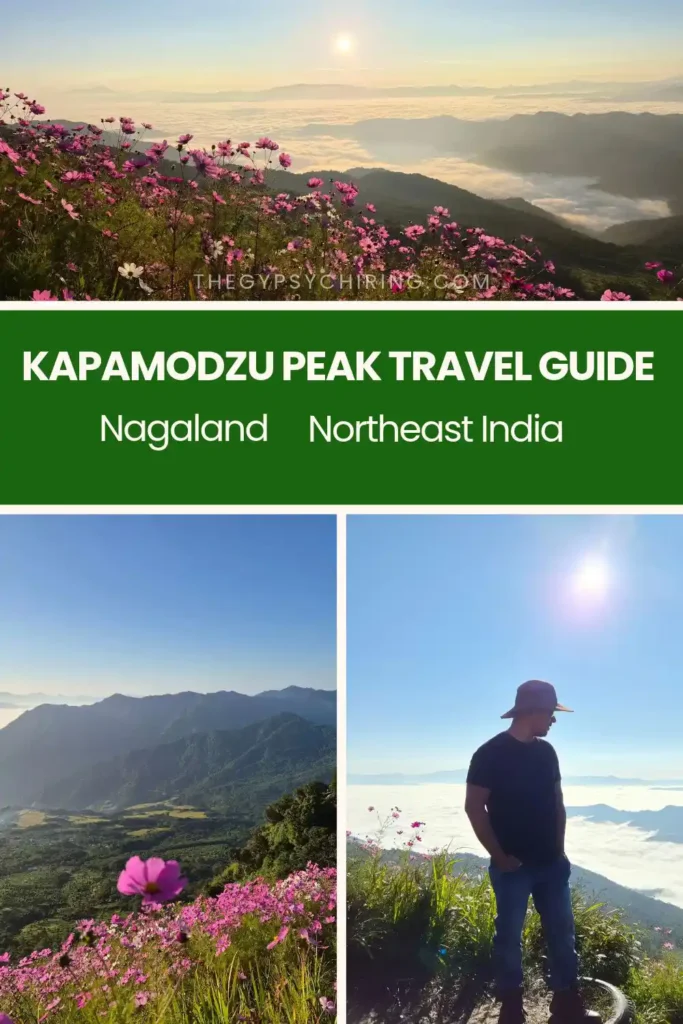
I visited Kapamodzu Peak in December 2021 as part of my 11-day trip to Nagaland. I travelled from Duliajan, Assam, to Kigwema Village, where I began my journey with a hike to Kapamodzu Peak, followed by an unforgettable trek to Dzukou Valley with my local friends.
We welcomed New Year 2022 together, and I spent a few days living with an Angami family, experiencing their culture, traditions, and everyday life.
I continued my adventure with a trek to Mt. Tempii (Iso) and another visit to Dzukou Valley on my birthday, this time with another Angami friend.
On the 10th day, I headed to Dimapur, where I explored Dimapur and its historical places with my Mizo friends before wrapping up my trip.
This blog post, however, focuses on my road trip to Kapamodzu Peak from Kigwema Village via Pfutsero town. On the way back, we took a different route through Senapati district in Manipur before re-entering Nagaland through Khuzama.
Along the way, I’ll share the route we took, the places we passed, and my experience of visiting Kapamodzu Peak.
You’ll also find practical information on how to reach the peak, the best time to visit, accommodation options, and the people, culture, and way of life in Zhavame Village.
I hope this guide helps you plan your trip to Kapamodzu Peak. When I visited in December 2021, the peak was still relatively unknown to tourists, and most of the people visiting were locals.
Watch My Interview about Nagaland on Trip101’s Channel
I have also shared about Kapamodzu Peak in this video
Kapamodzu Travel Guide
Before getting into the travel guide, let’s first learn a little about Kapamodzu Peak.
According to Chakhesang folklore and locals from Zhavame, “Kapa” is the name of an early forefather from Zhavame Village and “Modzü” translates to a claim or ownership over a specific place or things, particularly a peak. Therefore, Kapamodzü literally means Kapa’s territory.
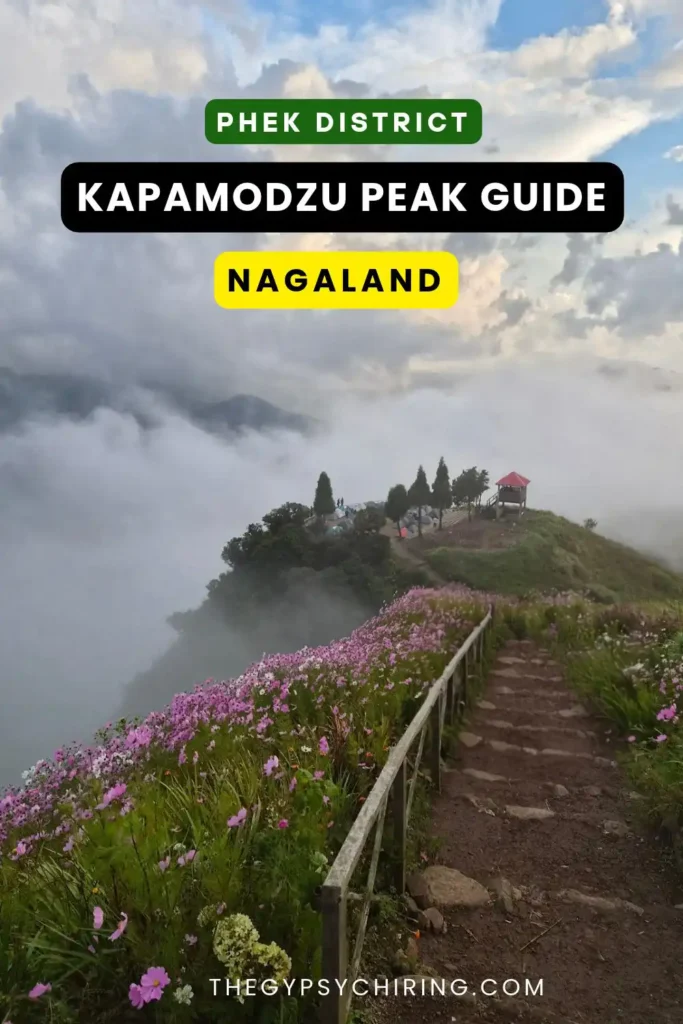
Located at an altitude of 2,620 m (8,596 ft) above sea level, Kapamodzu is the highest tabletop mountain in Nagaland.
A tabletop mountain has a relatively flat summit and steep slopes, giving it the appearance of a giant table rising above the surrounding landscape.
The flat surface at the top is large enough to settle as a small village. It looks similar to Table Mountain in Cape Town of South Africa.
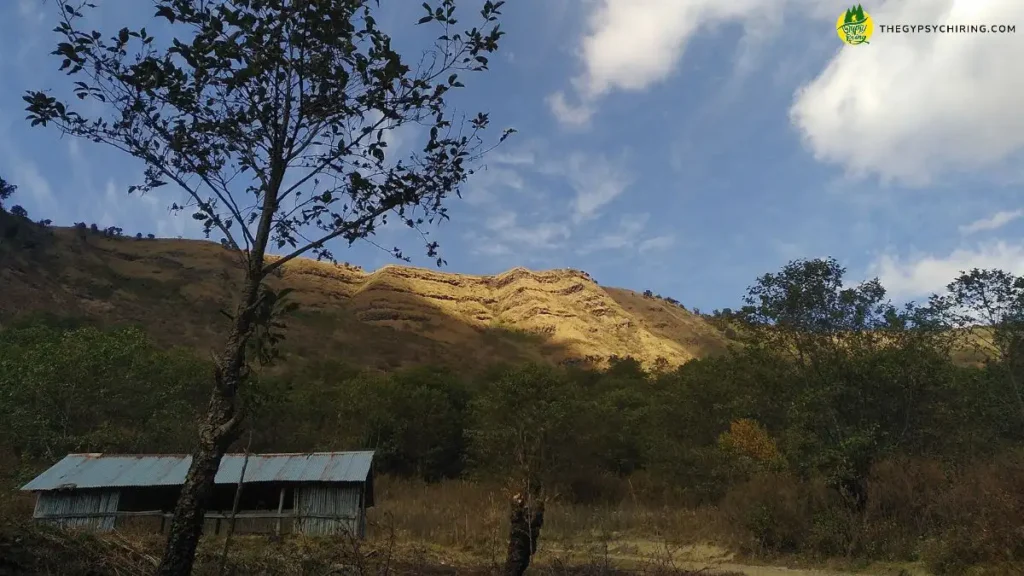
In geology, a tabletop mountain is also referred to as mesa, tepui, or tuya.
Where is Kapamodzu?
Kapamodzu is located above Zhavame Village in Phek district of Nagaland in Northeast India.
Why Visit Kapamodzu?
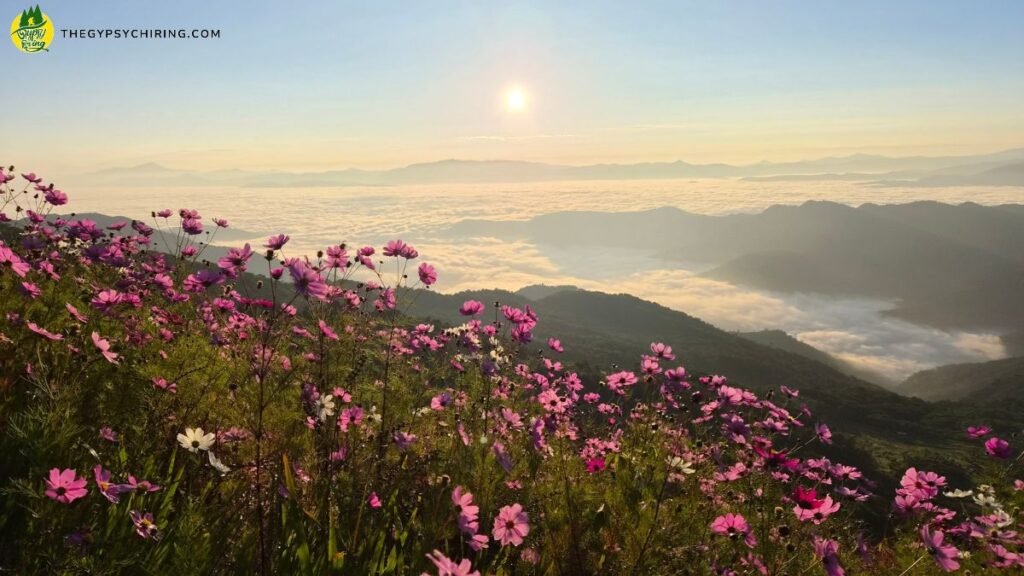
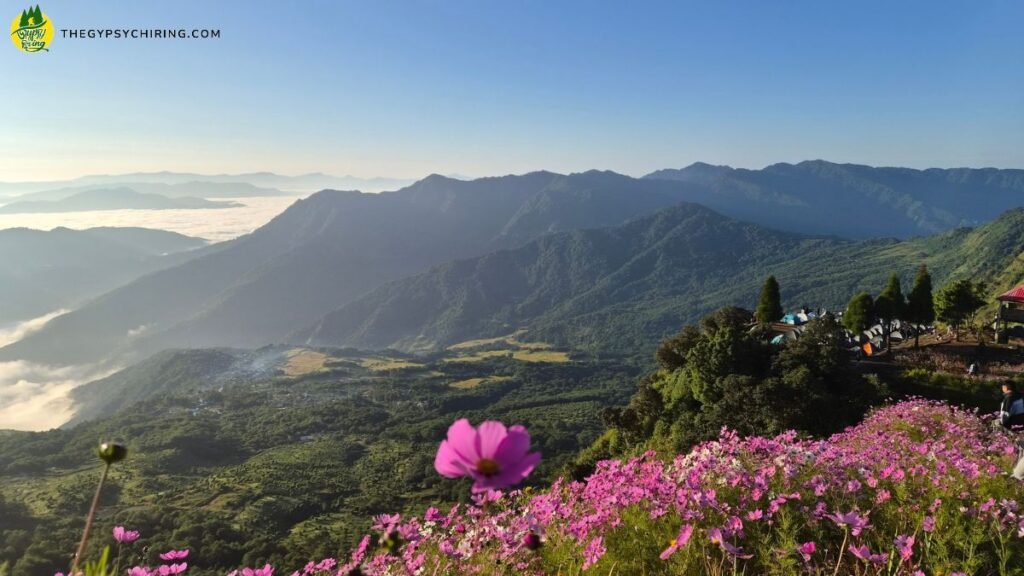
In recent years, Kapamodzu Peak has attracted more visitors during the cosmos flowering season. The colourful flowers, sunrise and sunset views, and surrounding mountain landscape are among its main attractions. The Starry Night view is equally otherworldly.
You can get a panoramic view of the mountains especially Mt. Saramati in the east, Mt. Japfu in the west, along with the villages of Zhavame (Nagaland) and Gaziphema (Manipur) in the south.
If you wish to trek to Mt. Kapamodzu, you have to start hiking from the Glory Peak of Pfutsero town.
Here’s a video on hiking to Kapamodzu from Pfutsero –
Watch Jacob’s trekking experience to Kapamodzu from Pfutsero
The other reason is to experience the rural and cultural life at Zhavame village.
How to Reach Kapamodzu Peak?
The Nearest Airports
Dimapur Airport is the nearest regional airport at a distance of 140 km from Kapamodzu Peak.
Lokpriya Gopinath Bordoloi International Airport in Guwahati is another option for travellers flying into Northeast India.
The Nearest Railway Station
There are two railway stations in Nagaland – Dimapur and Shokhuvi Railway Station.
I would recommend you board a train to Dimapur Railway Station (DMV) for maximum convenience – better chances onward transport and stay options.
From Dimapur to Kapamodzu Peak
You can rent a car from Dimapur directly to Kapamodzu Peak , a journey of 6-7 hours.
Alternatively, you can travel to Kohima first by traveling on a shared taxi from the station area. Next morning you can head to Kapamodzu.
From Kohima to Kapamodzu Peak
From Kohima, you can either rent a car or travel via Bus from Nagaland State Transport (NST) bus stand – a journey of 70 km. Shared taxis are also available to Pfutsero, but you will then have to hire another car till the top of the peak.
An alternative route to Kapamodzu Peak is via Khuzama in Nagaland. From there, you enter Manipur and travel through Mao town in Senapati district before re-entering Nagaland near Zhavame village, from where you can continue to the peak. Since road conditions may vary, check with locals about the current road conditions before setting out.
Best Time to Visit Kapamodzu Peak
The best time to visit Kapamodzu Peak is from September to November during the flowering season for the vivid cosmos flowers, clear skies, and best sunset and sunrise views and greenery all around.
Whom to Contact for Kapamodzu Peak?
Follow The Majestic Kapamodzu account on Instagram for updates and bookings, current conditions and the rules for visiting the peak.
You can get in touch with my local friend Metevizo Zhotso if you would like to arrange your trip from Kohima and Dimapur.
Another option is Explore Nagaland, a local tour company run by my friend Kezha’s family that specializes in organizing trips in Nagaland.
The growing interest in Kapamodzü has also created opportunities for local entrepreneurship. In a November 2023 report, The Morung Express highlighted how Rose Rekha had developed “The Majestic Kapamodzu” entity with facilities such as a restaurant, camping and trekking trails to make the peak more accessible to visitors.
She also acknowledged the role of Zhavame’s villagers, village council and students’ union in conserving the mountain and its biodiversity.
Stay Options in Kapamodzu
At the peak, there are four wooden cottages/cabins and a Campground: two Premium and Two regular cabins.
Here’s a video of the premium cabin at Kapamodzu by Apen Tanujang on Instagram.
The team of The Majestic Kapamodzu also provides Jumbo Tents on elevated bamboo platforms that can accommodate up to three guests.
For budget-friendly options, you can bring your own tent or rent tents and camping gears from the host.
If you want a cultural experience then stay at Zhavame Village where homestays are available too.
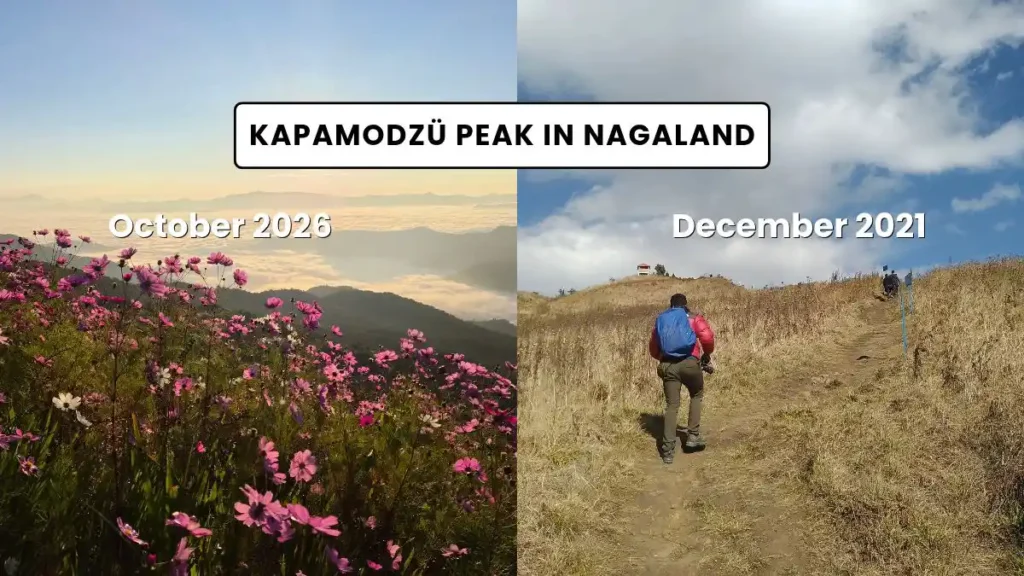
The above photo is from October clicked by my friend Khanjan Konwar who went with Metevizo.
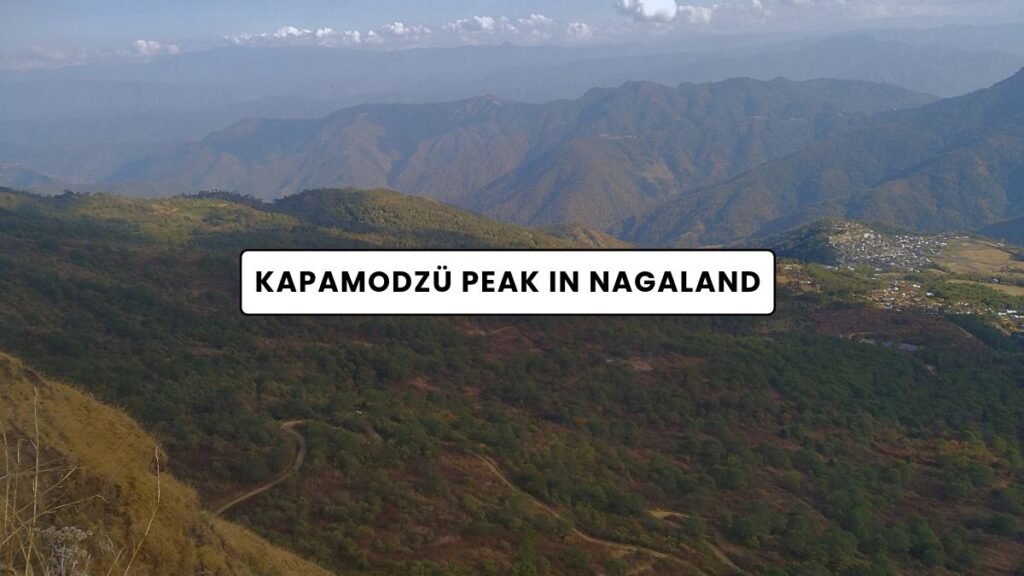
I visited in December, where there were no flowers, and the hills had turned brown, reflecting the dry winter season.
Important Note
The Peak remains closed to visitors every Tuesday for maintenance.
The Story Behind This Nagaland Trip
On the 22nd of December 2021, I received a phone call from Kezha – my Angami friend from Nagaland. “Brother, it has been a while since you visited Nagaland, come, we will explore some places and celebrate the new year together. My friends from Rajasthan, Kerala and Dimapur are also joining.” he said.
My Mom passed away due to post COVID complications in July 2021. I was grieving and overwhelmed with unresolved emotions. His phone call felt like the light in my darkest moments.
“I am definitely joining you guys. Can’t wait!” I replied. Five days later on December 27, I boarded the train with no fixed plans of return but with the hope to feel mentally better.
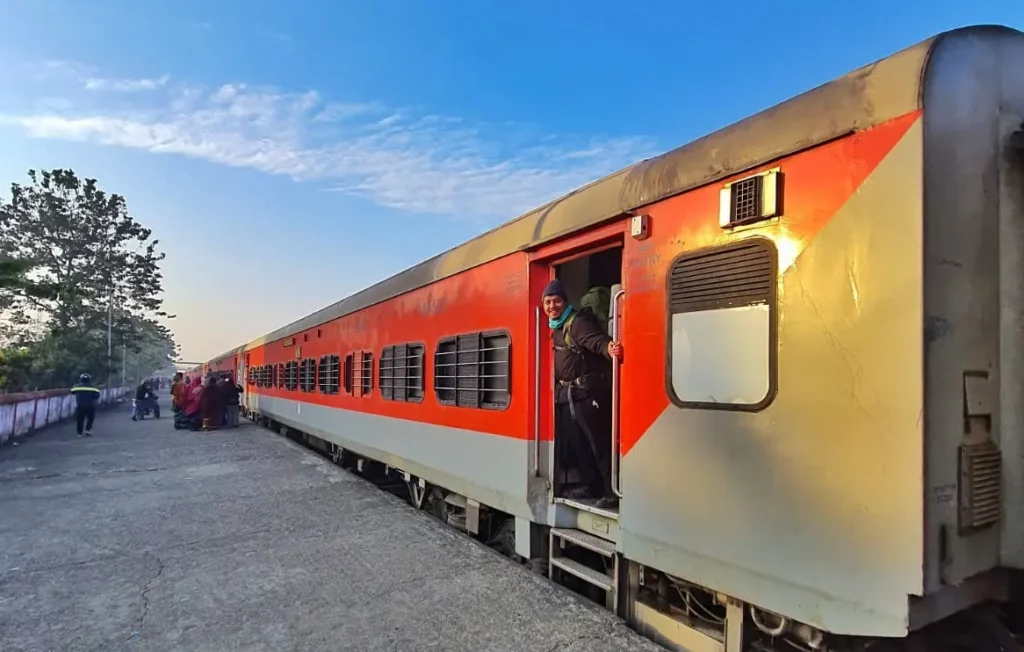
Joel – Kezha’s college friend who was from Kerala but travelled from Dibrugarh boarding the same train that passes my railway station. From the start to reaching Kezha’s home in Kigwema, we talked and laughed and shared about how excited we were for the coming days.
We got down at Oking Hospital in Kohima, and walked downwards to Morung Lodge, a homestay run by his aunt Nino Zhasa. I love the view of the Kohima and the distant hills from here.
I was in awe when I saw it for the first time. I had come for trekking to Mount Japfu in 2020. The kitchen was beautifully maintained in a traditional setting and it was overall a homely space.
After sunset, we headed to Greenwood Villa Homestay in Kipfüzha (Kigwema) – Kezha’s home and settled for the night.
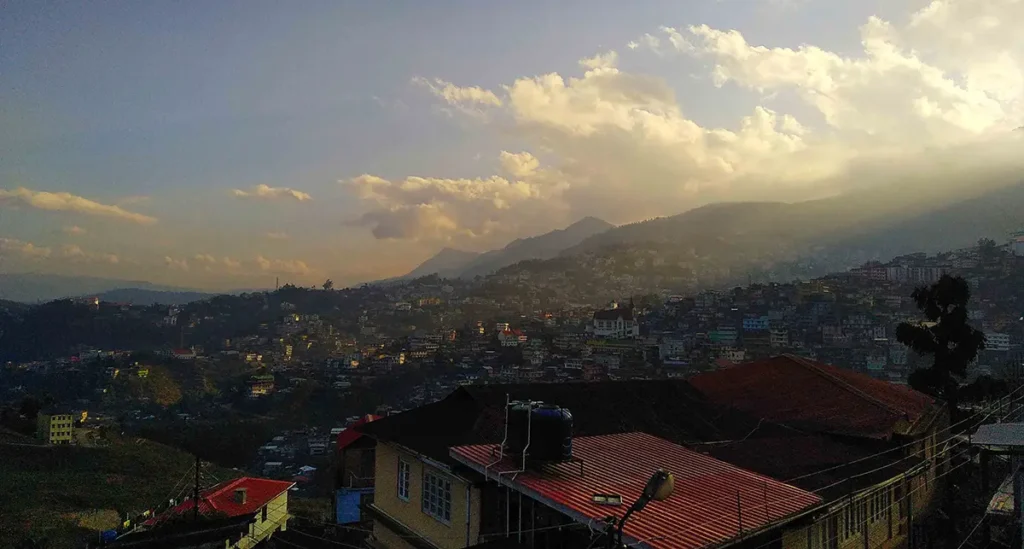
I would highly recommend you come and stay in Kohima or somewhere around Kigwema or Jakhama on the first day during your trip to Kapamodzu.
This is where I stay whenever I go to Nagaland –
1. Day Dream Nest Homestay in Jakhama.
2. Greenwood Villa in Kigwema (Kipfüzha).
3. Morung Lodge in Kohima.
The Adventurous Road Trip to Kapamodzu Peak
We started our journey as early as 7:40 am from Kigwema for Kapamodzu. Shurhongu a friend from Kohima also joined the three of us.
Kipfüzha (Kigwema) – Jakhama – Viswema – Kidima – Lasumi – Zapami – Pfutsero – Kapamodzu – This was the route we took. A journey of 72 km with multiple stops.
The morning was cold though the sun was up – Winter for a reason! At a shadow patch of road surrounded by trees, I saw workers preparing to start their roadwork. Ahead at a small junction somewhere around Kidima, we halted.
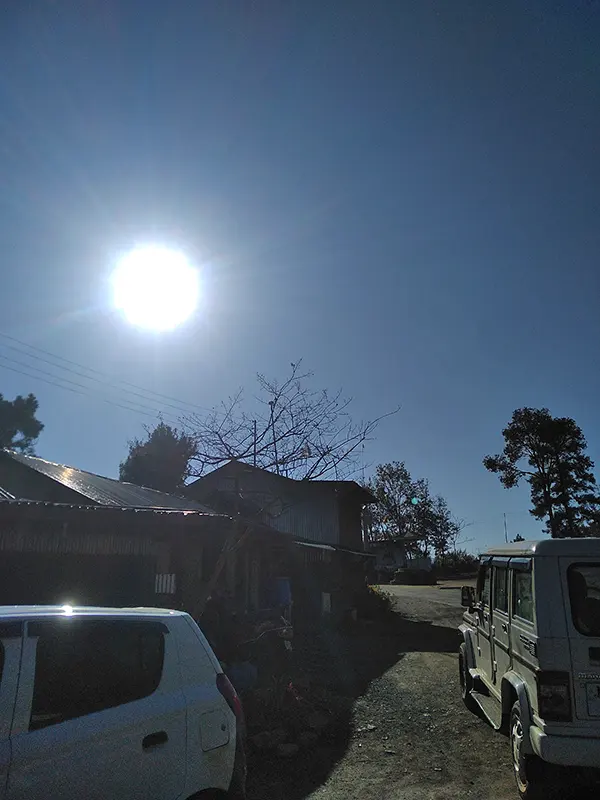
The shops were yet to open. Shurhongu offered us Nagaland coffee that he carried.
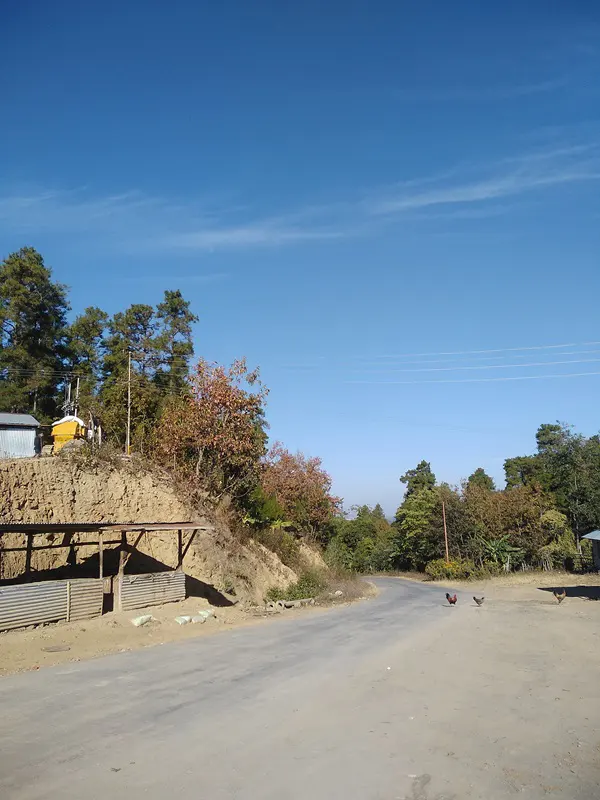
Every time we saw a beautiful landscape we decided to slow down, stop and experience it fully. I was loving how the sun shone brightly at our faces.
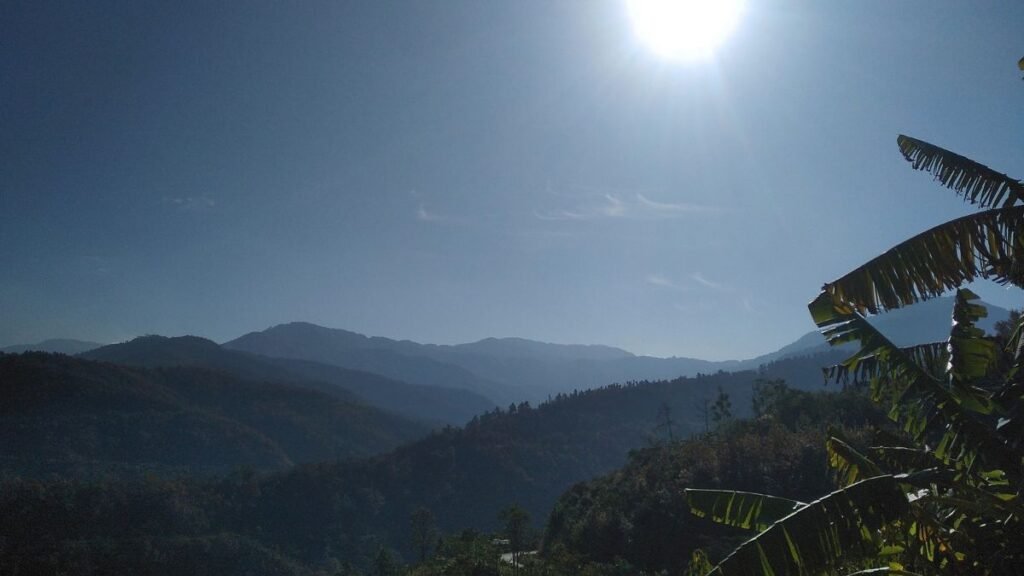
The hills in their morning colours reminded me of the sketchbooks and painting books I used to see, with layers of hazy green and bluish hills fading into the distance.
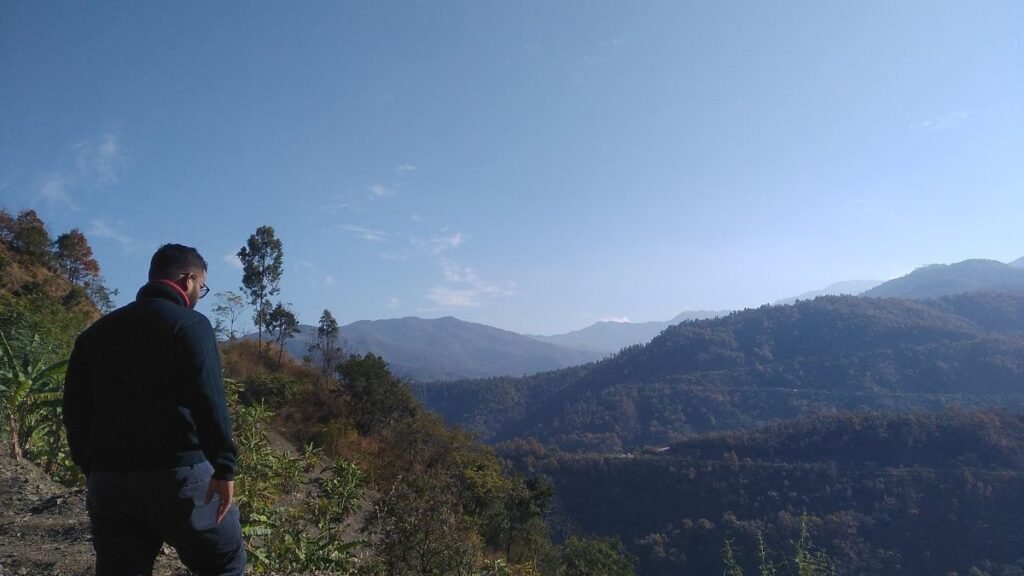
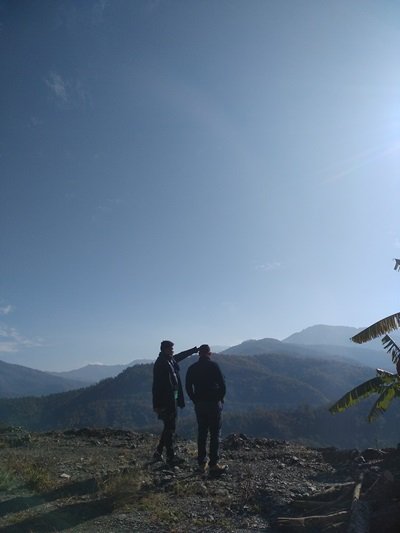
Travelling with Kezha is always a fun and enriching experience. I remember him sharing stories about Chakhesang culture, and pointing out to mountain peaks along the way, telling us their names and little about them.
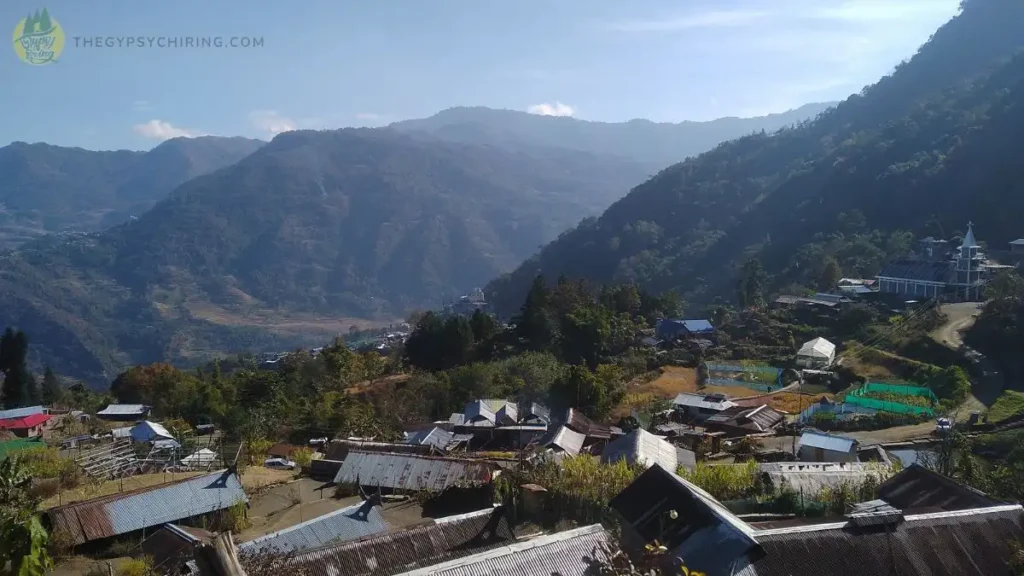
Right before we drove the higher stretch of roads, we halted again. Pfutsero – the highest town in Nagaland can be seen distinctly resting at the hill top from Lasumi Village.
As we began our journey uphill through the country roads, the peaks behind us like Mt. Japfu became clearer offering a visual treat to our eyes!
With such scenic roads, not listening to John Denver’s “Country Roads, Take Me Home” would have been like doing injustice to our souls. We sang sour hearts out!
The beauty of traveling with local friends is that we were in no rush. We reached Pfutsero at about 10 am and decided to take a break at Pfutsero as we were hungry.
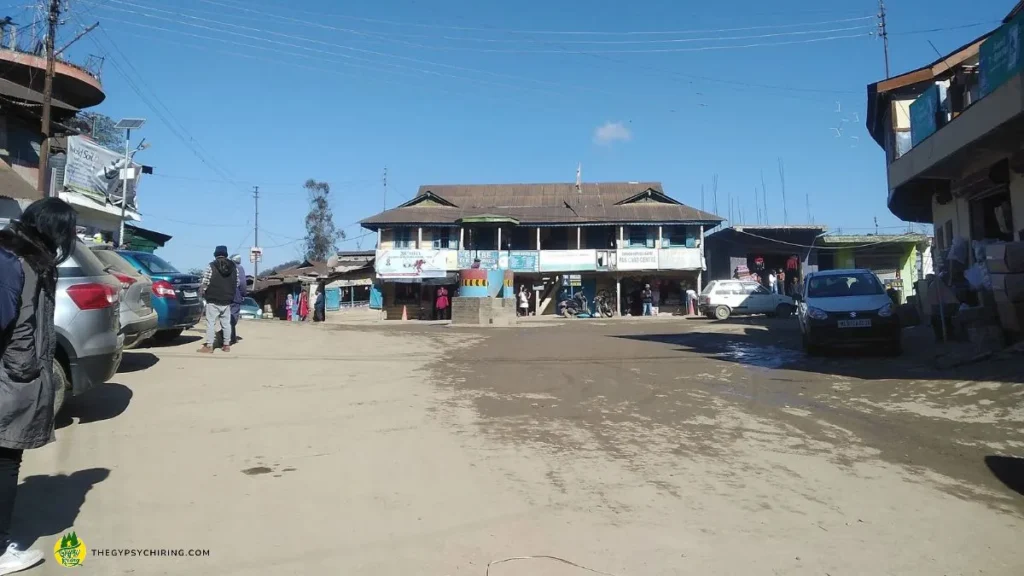
The restaurants were just opening, and not all of them had rice ready yet. We eventually found one where the rice was cooked but the rest of the dishes weren’t ready. So, we waited!
After a delicious Chakhesang traditional rice meal, we initially thought of going to Glory Peak in Pfutsero but decided to skip it this time.
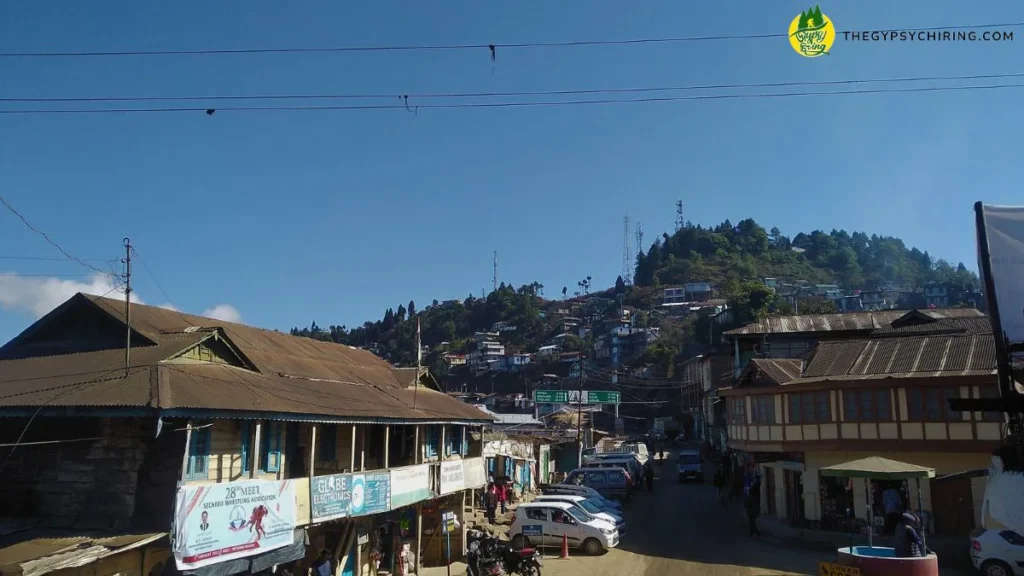
Buying a few snacks and cold drinks, we started towards a relatively offbeat route to Kapamodzu.
As Kezha drove us out of Pfutsero in the cold morning air, with the sun slowly coming up and the roads still quiet, he played a song dedicated to the town we were leaving behind.
It was the popular song named “Pfütsero” sung by the eminent Naga folk-artist Methaneilie Jütakhrie in Tenyidie (Angami) language in the early 1990s.
A song about the people, culture and nature of Pfutsero.
Though I couldn’t understand the lyrics, I could feel how much the song meant to the locals.
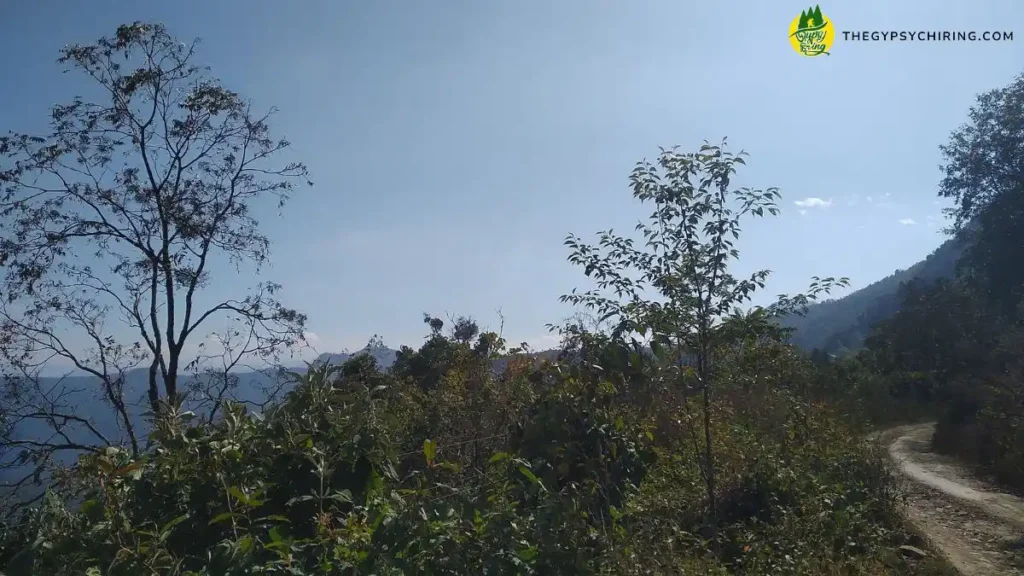
The off-roading drive to Kapmodzu was the most adventurous and scenic part of our journey. Along the way, I saw small vegetable farms, people carrying bundles of firewood on their backs.
A ray of sunlight kissed Kapamodzu Peak while the rest of the mountain was still under the shade of the morning clouds. It felt as if the Sun God was pointing towards it, telling us “That’s where your journey to heaven ends.”
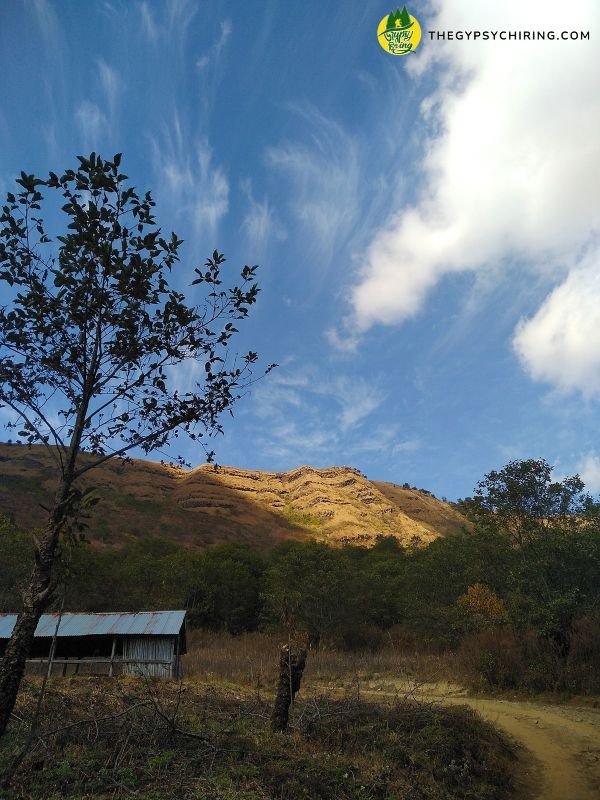
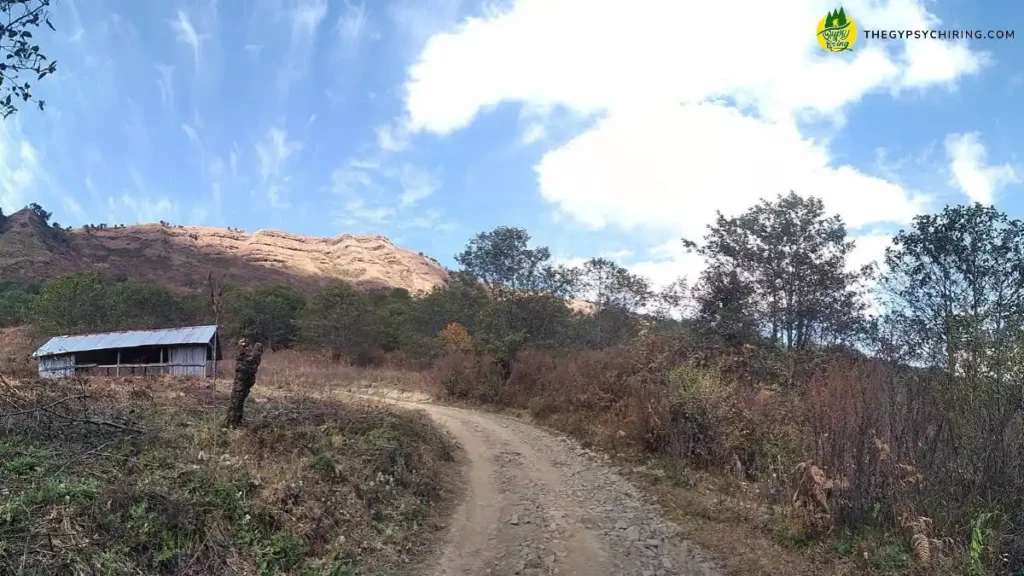
The final stretch of the road is the steepest and most thrilling of all, with the hillside rising right beside you on one side and a deep gorge dropping away on the other, offering a beautiful view of Zhavame village below.
There is a designated flat space where you can park your car.
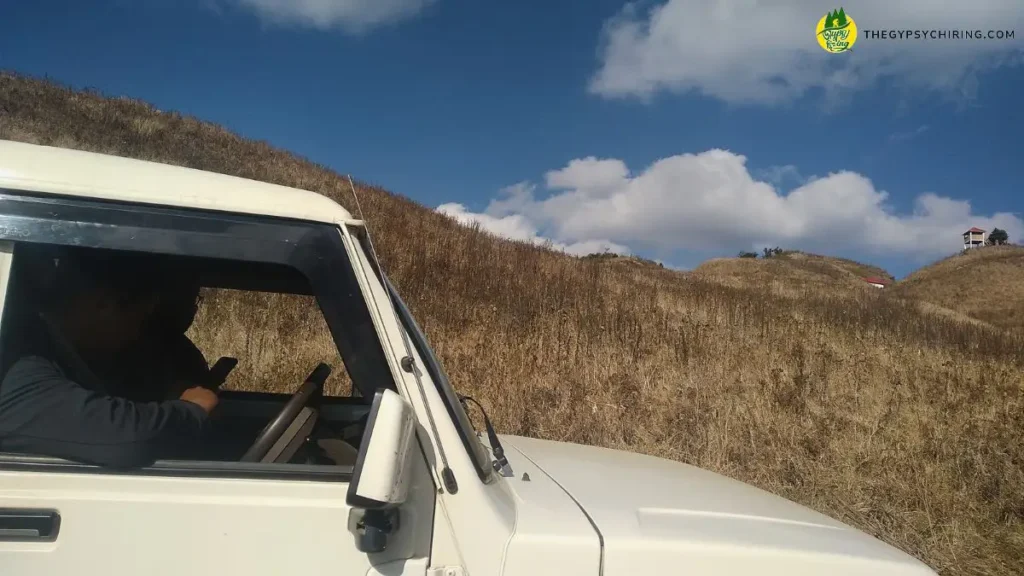
The sun was shining with its brightest glory. We started walking uphill towards the watch tower view point area excited to see how the view would be. We reached the top around 12:30 pm.
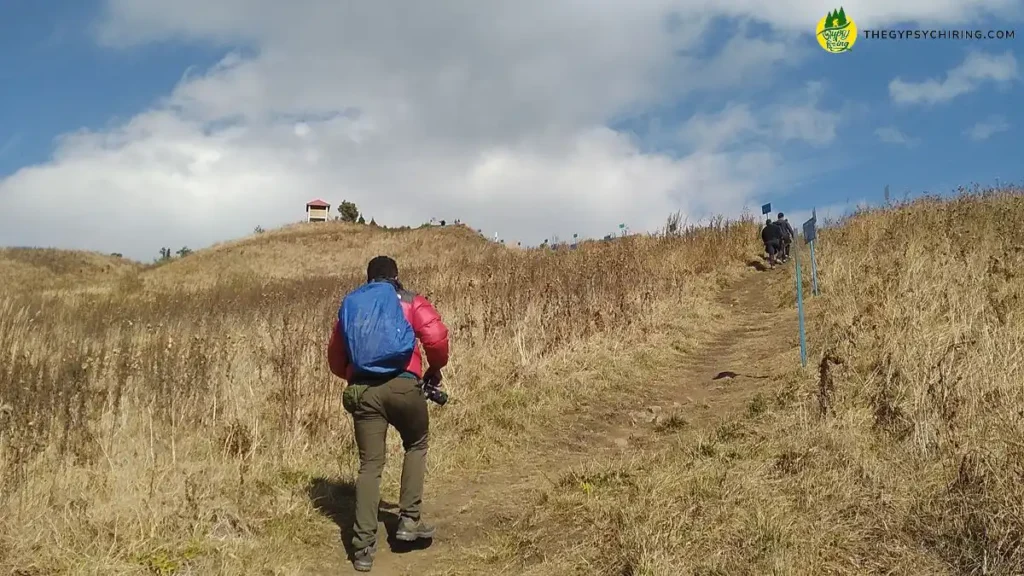
We reached a circular space with steps arranged like a small pavilion, facing the view of Mt. Saramati and the Patkai Range. The watchtower we had seen from below was just beside it.
The place was well maintained, with concrete boundaries and pine trees around it. We also met a few locals who had come from nearby areas with their church group.
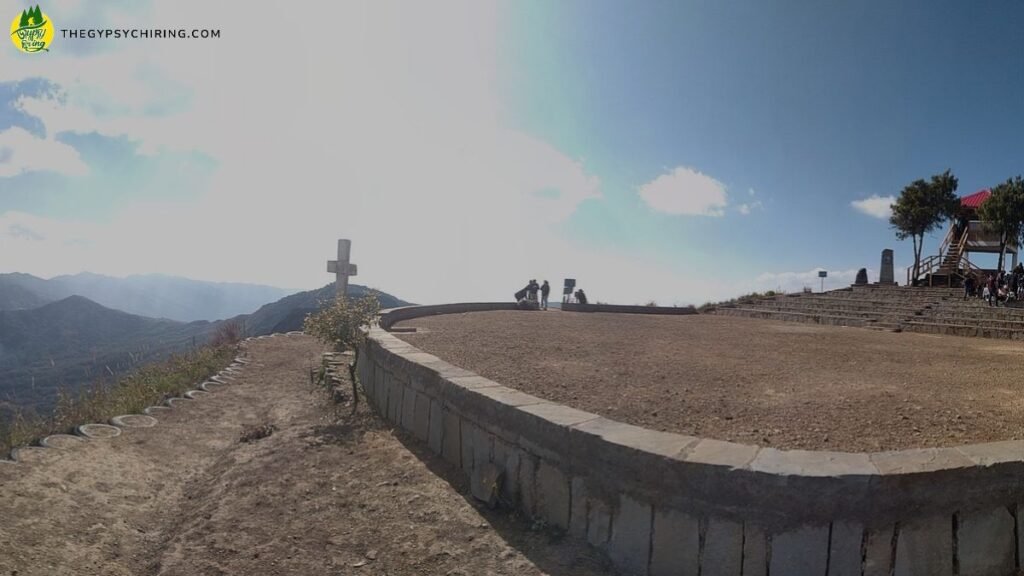
Compared to my earlier climbing experiences of Mt. Saramati and Mt. Japfu in Nagaland, Kapamodzu blessed me with a clearest views of all.
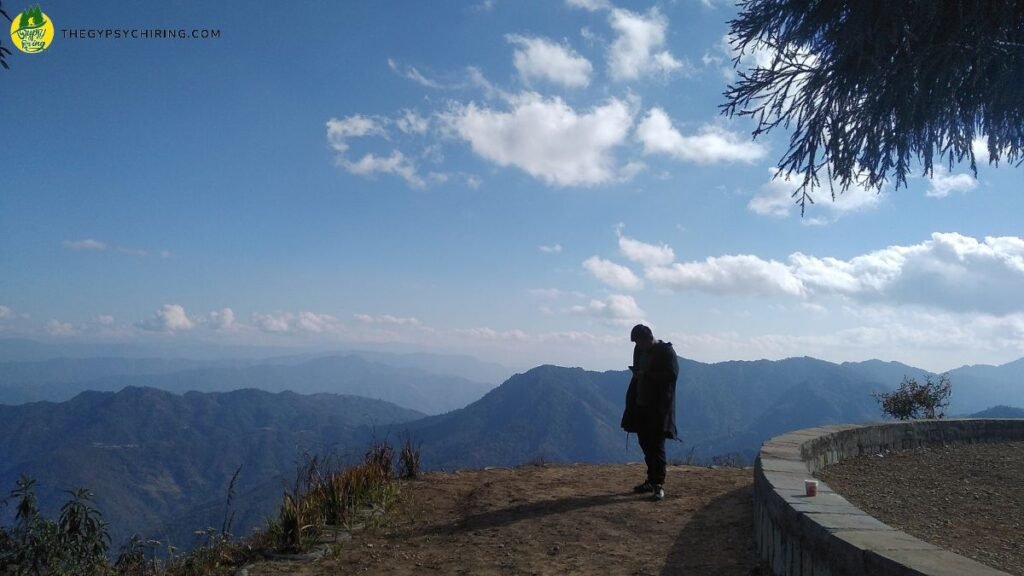
To rest a while after the hike in the heat, we chose a spot in the shade of a small tree.
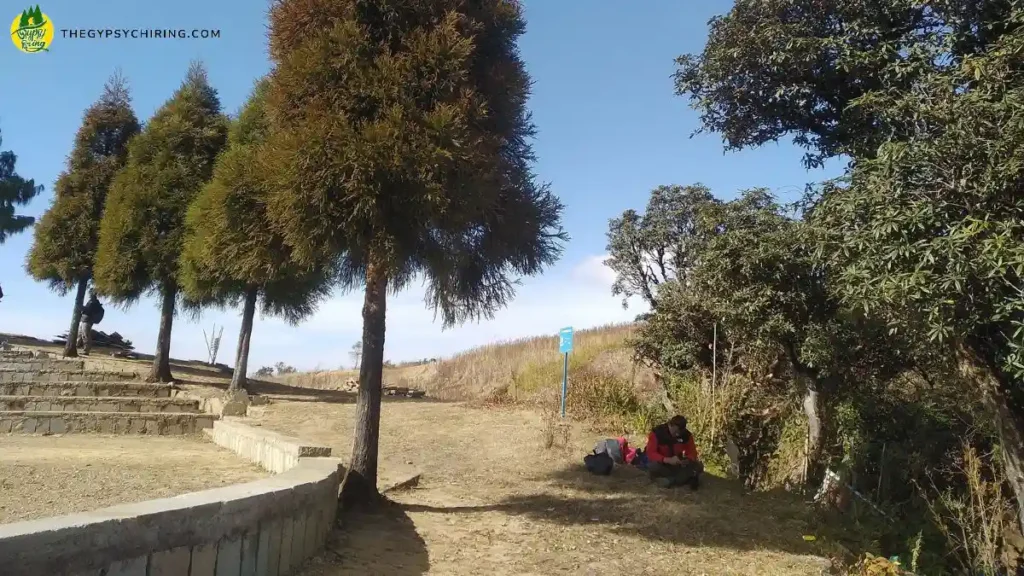
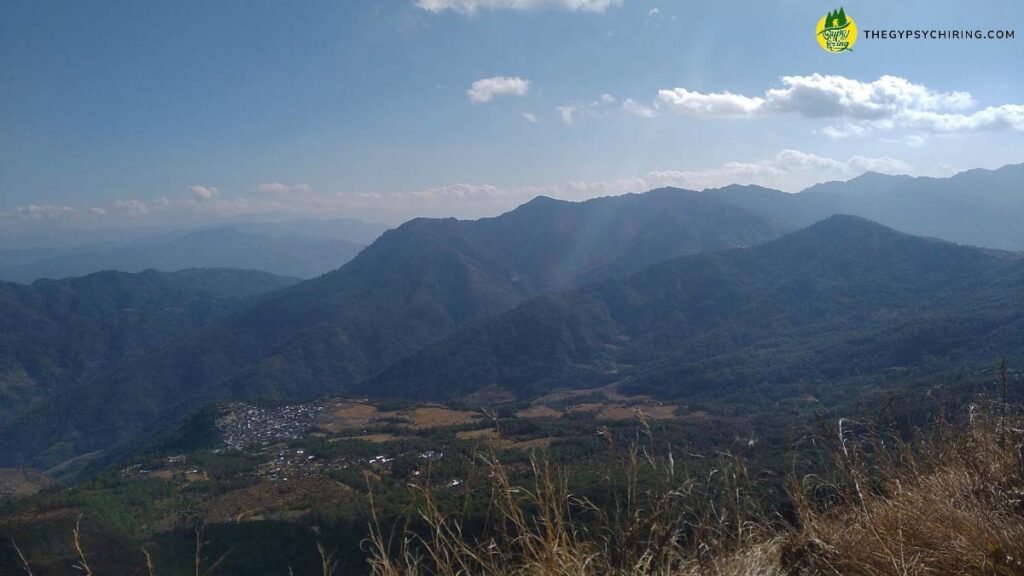
The village you see in the photo above is Zhavame at the foot hills of Kapamodzü. It is home to the the Chakesang Naga tribe with historical ties to the Poumai Naga tribe of neighboring Manipur.
In Poula dialect, the village name “Zhavame” refers to people of the enchanted lake, signifying the flat land surface area of the village despite being surrounded by hills and mountains.
You can read this article by Lu Chi about Zhavame published in 2025. She has meticulously shared about the culture, practices, and history of both the village and Kapamodzu in her researched article.
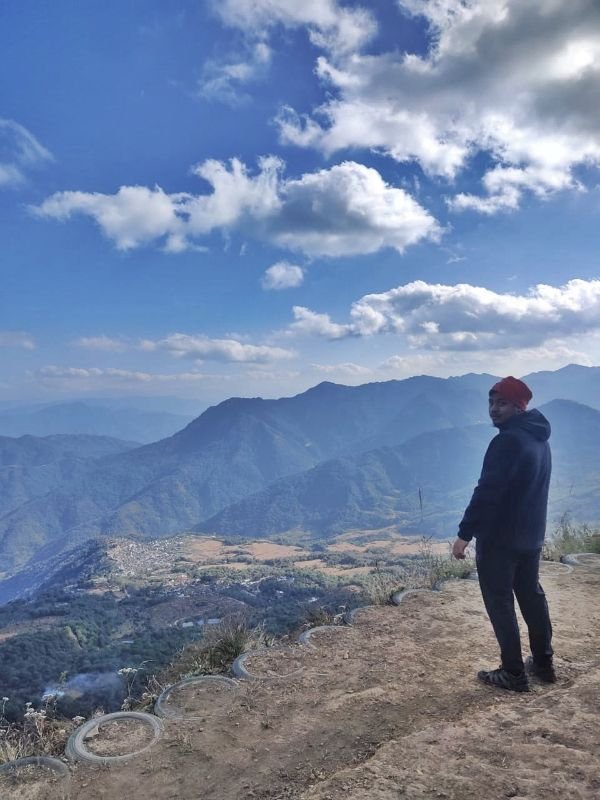
In 2020, the village was also declared as the “Vegetable Village” based on their production of organic vegetables particlarly cabbage and potatoes.
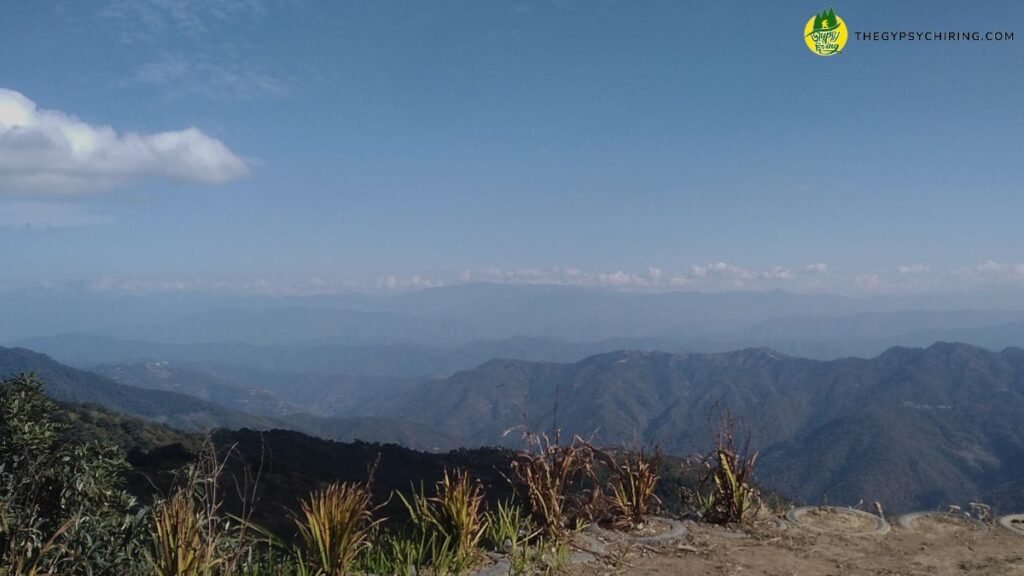
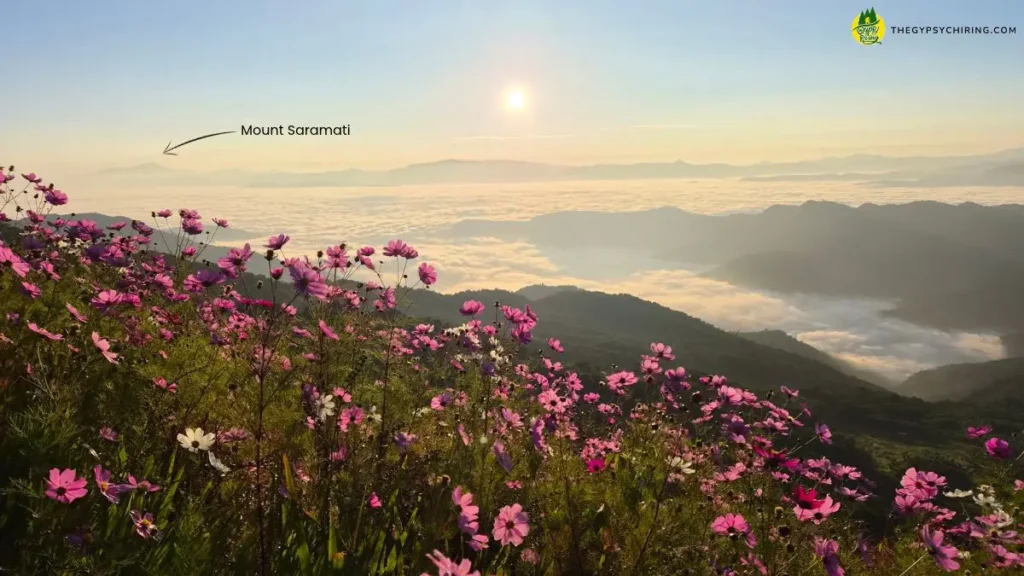
Looking at the hills standing close to each other, each rising higher than the last, one peak stood taller than the rest. It was Mount Saramati – the highest peak of Nagaland. Memories of climbing it in 2016 instantly came rushing back.
We spent the best 2 hours of our lives. It was cold though! But we were the happiest.
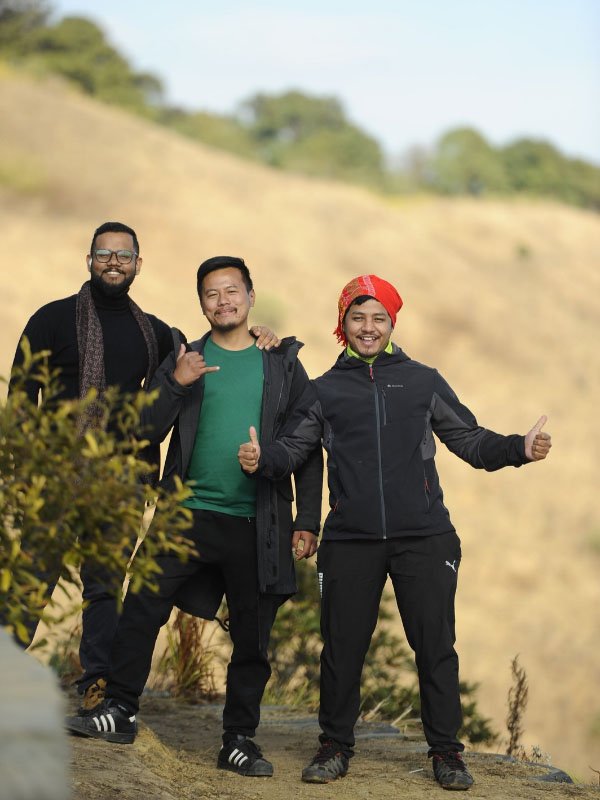
Conversing with a few locals there, Kezha found out that we could take road through Zhavame village and hills opposite to the peak, enter Manipur and then return to Nagaland via Khuzama. And just like that, our adventure through Manipur thus began!
This is the route we took while returning: Kapamodzu – Zhavame – Liyai Khunou – Tungjoy – Tadubi – Mao – Khuzama – Kigwema.
During my visit to Gaziphema, also known as Laii Village, in September 2025, I came across a route leading to Kapadmozu. Little did I know that this was the same route we had taken to enter Manipur from Kapamodzu.
Laii Village in Manipur opposite to Kapamodzu Peak and Zhavame Village of Nagaland
I have a habit of falling asleep in the car, haha! After watching the river far below in the green valley, which Kezha pointed out as the Barak river, I dozed off in the back seat.
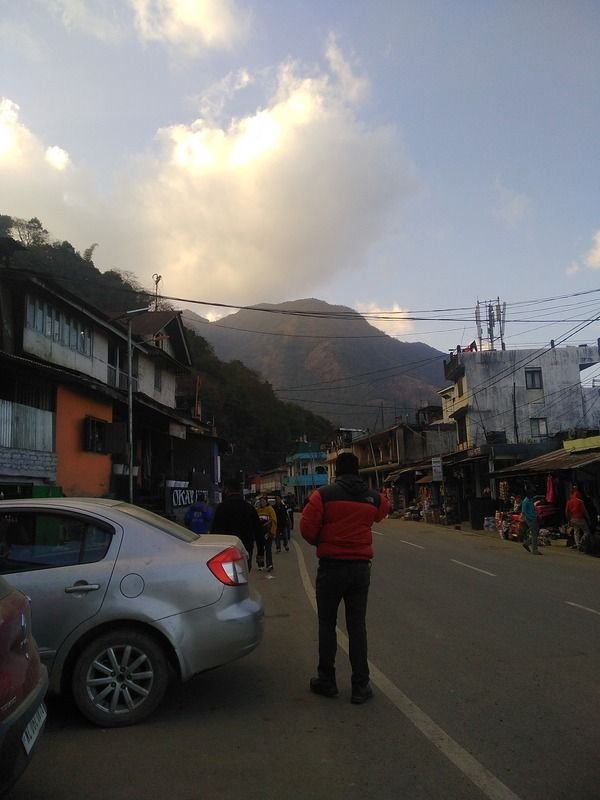
But I do remember the narrow village roads and villagers walking towards a wedding. I woke up right before sunset at Mao town. The sun was hiding behind the clouds above Mt. Iso (Tempii).
And so, our little adventure came to an end. Npezié (thank you), Kezha, for this trip. It will always be one of my core memories from Nagaland.
Summing it Up
Since my visit in 2021, Kapamodzü has gained greater recognition as a destination in Nagaland, attracting visitors from beyond the local community.
In her 2023 editorial on the mountain, journalist Vishü Rita Krocha wrote about this growing interest, with visitors ranging from students and adventure groups to families and independent travellers making their way here.
While visiting the peak is an experience in itself, I believe it is equally important to learn about the local culture and the people who call this place home.
So, the next time you visit Kapamodzü, take some time to explore Zhavame village too.
I hope to return to Kapamodzü someday and spend a few days in Zhavame, learning more about the community and finding ways to connect through meaningful and experiential travel.
Kindly travel responsibly and respect the local culture.
Just a little fun fact: Except the flower and zoomed-in photos, all other pictures were taken on my old Redmi Note 5 phone. Vintage photos, haha!
Found this Kapamodzu blog post helpful? Share it with friends you would like to visit with.